
Key Takeaways
- Strategic portfolio management tools are software solutions whose main goal is to help companies align their project portfolio to corporate strategy [9].
- Traditional PPM platforms fall short because they aim to manage projects right, while you need to manage the right projects [8].
- To choose the perfect strategic portfolio management software, look for advanced scenario planning, resource and risk management features, dynamic project prioritization based on their business value, and, ultimately, check for needed integrations.
Read More: 10 AI Project Management Tools to Pay Your Attention to in 2026
What is strategic portfolio management software?
Strategic portfolio management (SPM) software is a project management software the main goal of which is to help enterprises align their project portfolio with the corporate strategy. In fact, it is the older brother of traditional PPM (project portfolio management) software (I would say, a more mature version).
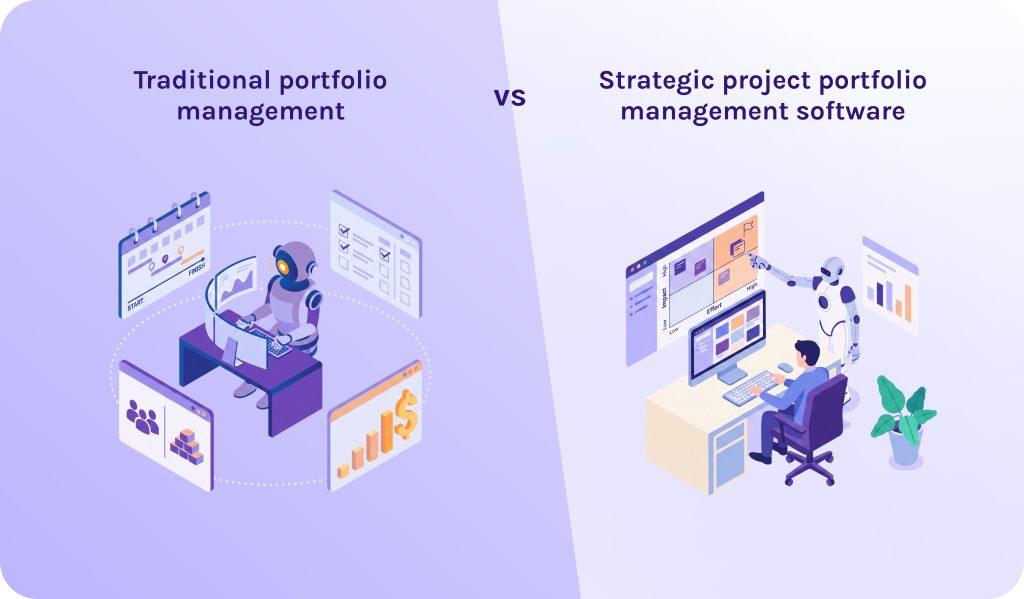
Why do we need strategic portfolio management tools if we already have project portfolio management tools? The answer is quite obvious:
- Traditional portfolio management platforms help you manage projects right by monitoring budgets, resources, timelines, and tasks in real time [8].
- Strategic project portfolio management software ensures that you’re managing the right projects. Such software helps you prioritize projects and resources in a way that supports your strategic goals and drives growth[9].
In simple terms, PPM tools ensure you manage projects right, while SPM tools help you choose the right projects and prioritize them over the others.
Read More: AI in Project Portfolio Management: 7 Key Trends & Features
What are the core features of strategic portfolio management software?
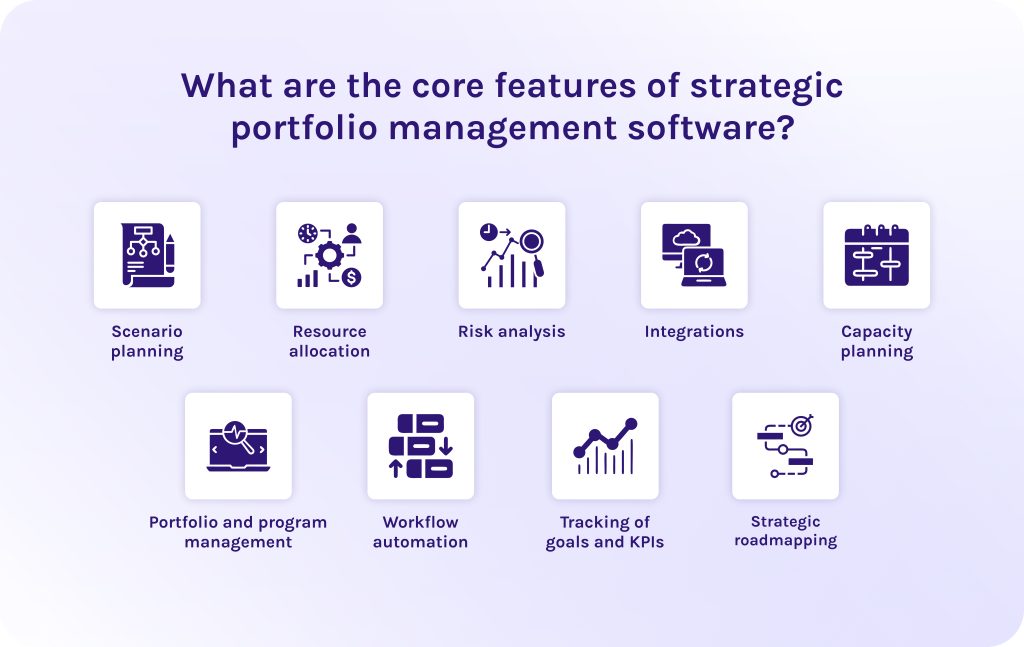
- Scenario planning. Strategic portfolio management (SPM) tools must offer “what-if” sandboxes to model even the smallest changes before applying them in real projects. You can test how changes in priorities or timing will impact the entire business before making commitments.
- Resource allocation. This capability of strategic portfolio management tools matches the right talent to specific tasks based on skills and availability to maximize overall productivity.
- Risk analysis. Identifies and flags different portfolio vulnerabilities. If it sees that one of your projects overlaps with another, you’ll know about it immediately.
- Integrations. The perfect strategic project portfolio management software automatically pulls real-time progress and financial data directly into executive dashboards.
- Capacity planning. This feature of portfolio management tools measures long-term resource supply against incoming business demand to prevent critical bottlenecks.
- Portfolio and program management. Strategic portfolio management tools software must organize, prioritize, and track groups of related projects and products to ensure they deliver collective business value.
- Workflow automation. Enterprise portfolio management platforms must route project proposals through standardized approval chains so that the leadership can consistently evaluate incoming initiatives.
- Tracking of goals and KPIs. Software for project and portfolio management directly links strategic metrics to active projects, ensuring every dollar spent delivers measurable results.
- Strategic roadmapping. Strategic portfolio management software must create dynamic timelines that visually connect high-level strategic goals to product releases.
Read More: The Next Generation of PMO Tools: How to Choose the Perfect One for You
What are the benefits of strategic portfolio management tools?
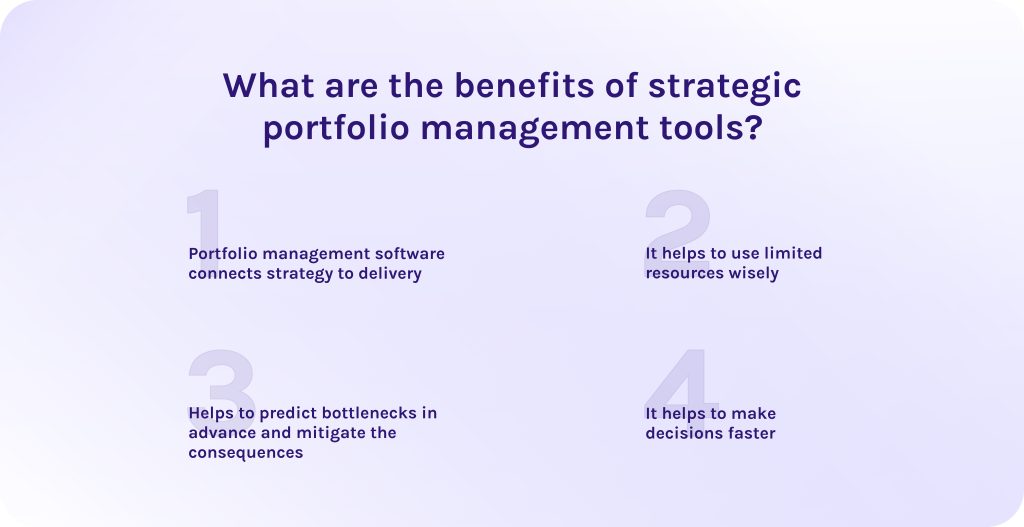
1. Portfolio management software connects strategy to delivery.
According to the Harvard Business Review, up to 67% of business strategies fail due to poor execution. However, strategic portfolio management tools directly link high-level corporate objectives to everyday project execution. If a project does not actively support a corporate goal, the software flags it, ensuring that every dollar spent directly moves the company forward [3].
2. It helps to use limited resources wisely.
The biggest constraint in any organization is rarely the budget. Usually, it is the capacity of specialized personnel. In turn, strategic portfolio management software provides visibility into workloads across the entire portfolio. It ensures the right talent is assigned to the highest-priority strategic tasks, preventing employee burnout and simultaneously maximizing organizational productivity [6].
3. Helps to predict bottlenecks in advance and mitigate the consequences.
Often, companies react to crises after they already happen. But if you use strategic portfolio management tools that use predictive analytics and real-time dependency tracking, you’ll be able to resolve all problems in advance. Thanks to the “what-if” scenario planning feature, leadership can safely simulate possible changes and create mitigation strategies to keep their portfolios safe [5].
4. It helps to make decisions faster.
Traditional portfolio reporting is notoriously slow. It relies on static spreadsheets that are often outdated by the time they reach executives. In turn, strategic portfolio management tools consolidate enterprise data into one dashboard, allowing leadership to make quick investment decisions confidently and adapt to sudden market shifts [4].
Read More: Stop Guessing, Start Scaling: Top 8 Capacity Planning Software
How did we select the best strategic portfolio management software?
We wanted to create an independent list of the top strategic portfolio management software. Thus, we estimated each platform against different criteria connected to its capabilities, industry fit, and, of course, reviews from verified users.
- Best fit: We defined the exact organization size, industry, and complexity each tool is genuinely optimized to serve.
- Integrations: We evaluated each portfolio management tool according to its ability to connect to your existing software ecosystem so that the new solution won’t ruin a perfectly built chain of workflows.
- Key features: We searched for strategic portfolio management tools that have basic and advanced features simultaneously. Task management, resource planning, risk management, strategic alignment, dynamic prioritization all these features are must-have for efficient project and portfolio management.
- Resource management: Each truly efficient strategic portfolio management software must provide visibility into resource workload across the entire project portfolio.
- Strategic alignment: We needed to understand how seamlessly the chosen software can connect the company’s strategy to daily operations.
Read More: Product Portfolio Management Tools: Complete Guide to Choosing the Best Solution in 2026
What are the 7 best strategic portfolio management software?
1. Epicflow
Best for:
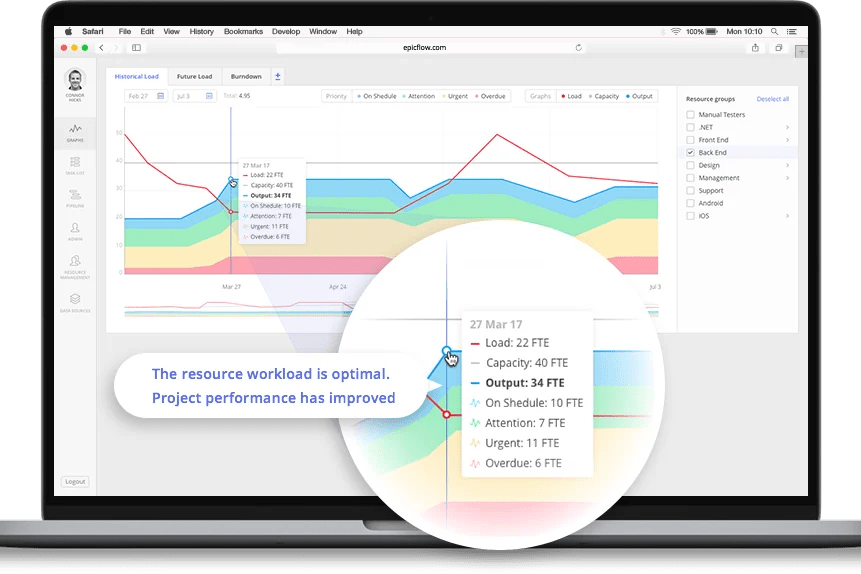
Mid-market to large enterprises operating in multi-project environments that need to resolve severe resource constraints and bottleneck issues.
Key features for strategic portfolio management:
- AI -driven portfolio optimization.
- Dynamic project and task prioritization.
- Workload balancing.
- Predictive bottleneck forecasting.
- Critical path analysis.
- Dependency tracking.
- What-if scenario planning.
2. Triskell Software
Best for:
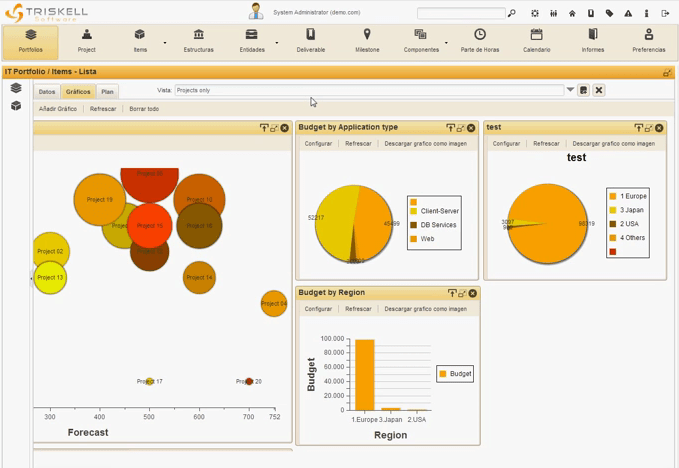
Organizations that need a highly flexible agile platform for traditional IT governance and strategic planning.
Key features for strategic portfolio management:
- Supports different project management methodologies (Waterfall, Agile, product-centric ones, hybrid).
- Configurable scoring models.
- Strategic alignment.
- Interactive timelines.
- Real-time project execution.
- Financial tracking and budgeting.
3. ServiceNow
Best for:
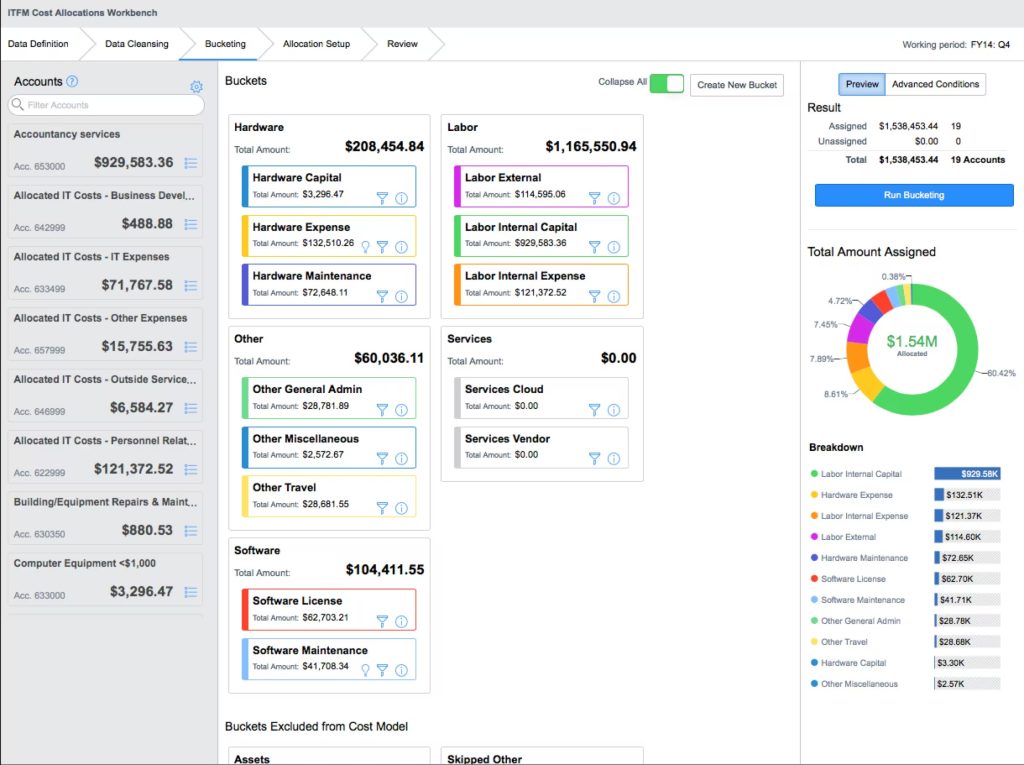
Mature global enterprises that are already embedded in the ServiceNow ecosystem.
Key features for strategic portfolio management:
- Demand management.
- Manages strategy and execution simultaneously.
- Mature scenario planning.
- Powerful executive interface.
- Portfolio health and performance analytics.
- Customizable executive dashboards.
- Deep financial and risk tracking.
4. OnePlan
Best for:
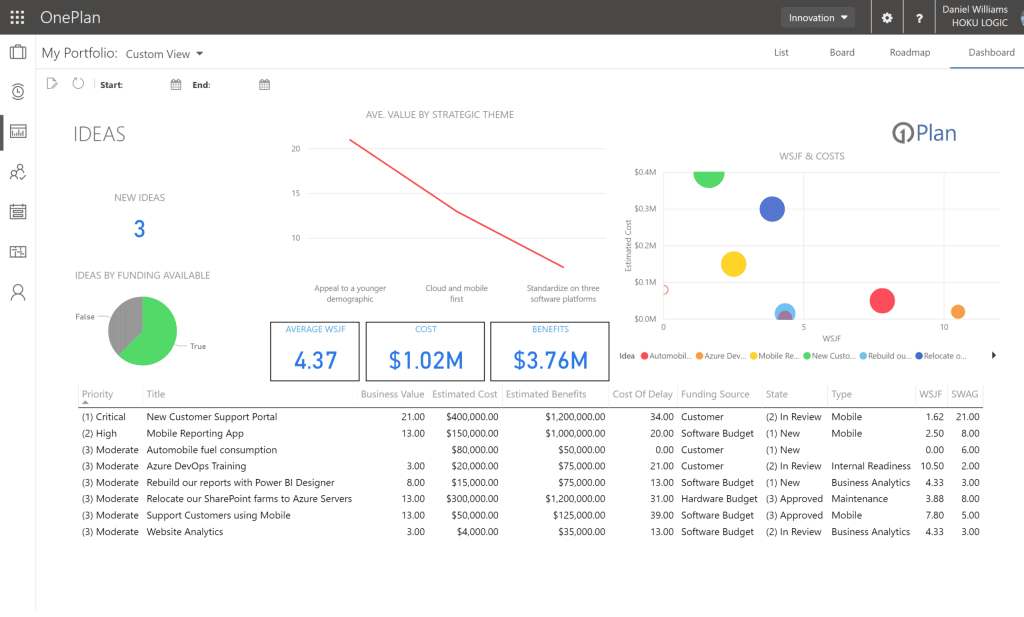
Enterprises seeking a Microsoft-centric environment that consolidates diverse work-execution tools (like Jira, Azure DevOps, or MS Project) into a single strategic view.
Key features for strategic portfolio management:
- Has a native Microsoft integration.
- Strategic OKR mapping.
- Standardized portfolio view.
- Multi-tool execution rollups.
- Financial and capacity planning.
- Financial forecasting.
- Resource allocation.
5. ITONICS
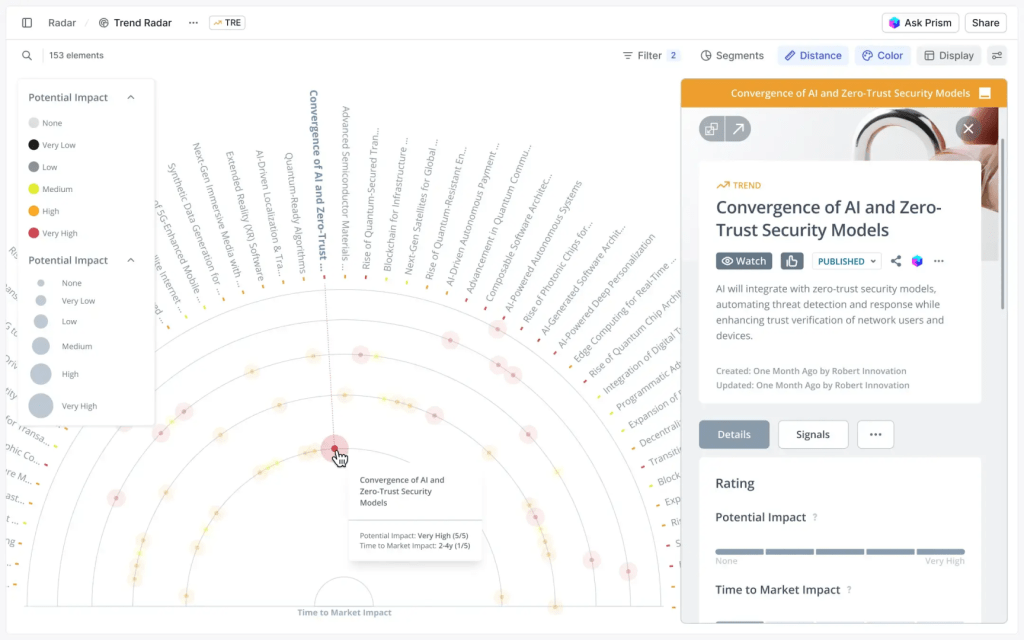
Best for:
R&D-heavy enterprises (especially in automotive, healthcare, and manufacturing).
Key features for strategic portfolio management:
- AI-powered trend detection.
- Environmental scanning.
- Startup monitoring.
- Real-time market opportunities evaluation.
- Market risk alerts tracking.
- Interactive timelines.
- Prism portfolio optimization.
6. Planview
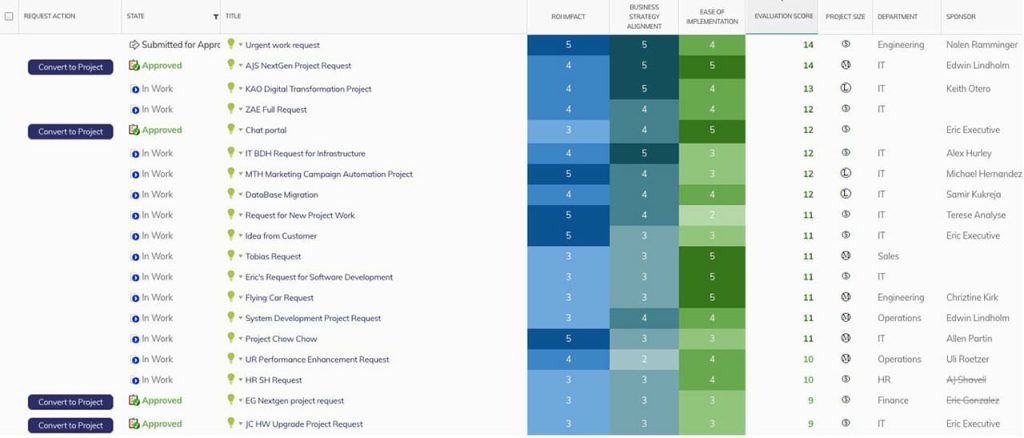
Best for:
Large global enterprises and highly matrixed organizations requiring robust enterprise-wide capital planning and continuous portfolio rebalancing.
Key features for strategic portfolio management:
- Enterprise capital planning.
- What-if scenario modeling.
- Dynamic funding
- Resource allocation and reallocation.
- Planview Copilot.
- Hidden dependency detection.
7. Accolade
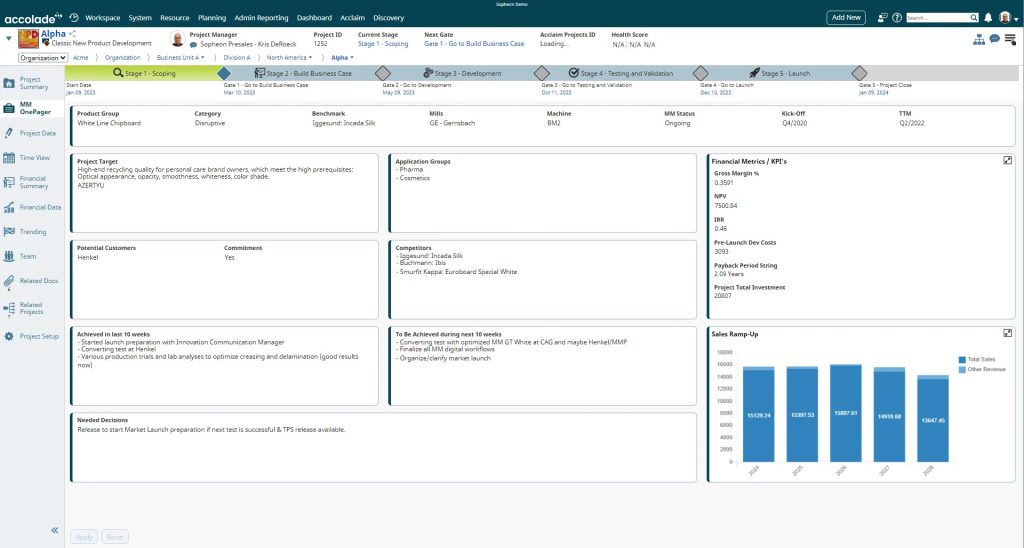
Best for:
NPD (new product development) teams and product-led enterprises looking to streamline stage-gate governance and accelerate high-value products.
Key features for strategic portfolio management:
- Strategic innovation governance.
- Financial and risk planning.
- Multi-dimensional scenario modeling.
- Integrated performance analytics.
- Revenue rollups.
- Non-financial risk drivers.
- Demand and ideation filtering.
Read More: What is Program Management? A Deep Dive into Strategic Success and Program Leadership
How to choose strategic portfolio management software?
To choose the right solution for managing your strategic portfolio, pay your attention to these steps:
- Evaluate your company’s size. Choose a portfolio management software tailored to your organization’s footprint. Smaller companies need more lightweight tools, while massive enterprises require heavier software to manage thousands of employees.
- Define the complexity of your portfolio. Assess whether you are managing simple, standalone projects or highly complex initiatives with deep dependencies.
- Define the needed level of customization. Determine if your organization can adapt to standard strategic templates or if you require highly flexible strategic portfolio management software that can be customized to match your specific workflows.
- Understand the required level of scalability. Ensure the portfolio management tool can seamlessly handle a growing volume of users and data over time.
- Create a list of needed integrations. Map out the must-have connections your strategic portfolio management (SPM) tool needs with your existing ecosystem.
- Calculate the total cost of ownership. Look not only for the initial license fee or subscription pricing, but also for hidden costs for data migration, upgrades, support.
- Check for client support and onboarding. Select a portfolio management software vendor that offers a structured onboarding program and dedicated technical support.
Read More: A Complete Guide to the Leading Resource Management Tools in 2026
Conclusion
In 2026, strategic portfolio management tools are more valuable than ever. For companies that struggle to align their project portfolio with strategic goals, these software solutions help them get a second wind and gain a strong competitive advantage. If you still don’t know which strategic portfolio management software to choose, here is a quick recap:
- Epicflow – best for solving multi-project resource constraints.
- Triskell – best for hybrid portfolios.
- ServiceNow – best for working directly within the ServiceNow ecosystem.
- OnePlan – best for organizations deeply embedded in the Microsoft ecosystem.
- ITONICS – best for market trend analysis and technology foresight.
- Planview – best for advanced planning across thousands of projects.
- Accolade – best for new product development (NPD) in manufacturing, chemical, or pharma companies.
Hope this will help you to find your perfect software, and all your strategic goals will be achieved.
FAQs
1. What is strategic portfolio management software?
Strategic portfolio management (SPM) software is an enterprise-level platform that helps executive leaders align all their resources (including business investments, technology assets, project portfolios) with the long-term corporate strategy. Portfolio management tools provide a high-level view of resources and goals through unified dashboards to give them the ability to test various scenarios and adjust schedules and effort in response to market changes.
2. What is the best software for portfolio management?
The selection of the best strategic portfolio management software depends on your industry, team size, maturity of workflows, needed functionality, etc. Here is the shortlist of the most popular market solutions for strategic portfolio management.
- Epicflow – best for solving multi-project resource constraints.
- Triskell – best for hybrid portfolios.
- ServiceNow – best for working directly within the ServiceNow ecosystem.
- OnePlan – best for organizations deeply embedded in the Microsoft ecosystem.
- ITONICS – best for market trend analysis and technology foresight.
- Planview – best for advanced planning across thousands of projects.
- Accolade – best for new product development (NPD) in manufacturing, chemical, or pharma companies.
3. What is the difference between project management and strategic portfolio management?
- Standard project management focuses on the execution of specific initiatives and ensures they are completed on time within budget.
- Strategic portfolio management is an executive-level process that evaluates and selects the best mix of all projects across the organization. The main strategic goal is to maximize value and align with long-term business goals.
4. What is Warren Buffett’s 90/10 rule?
Warren Buffett’s 90/10 rule is an investment recommendation for a simple retirement portfolio where 90% of the money is invested in a low-cost S&P 500 index fund and the remaining 10% is kept in short-term government bonds. This strategy is designed to easily outperform most active money managers over the long term while maintaining a small buffer of cash.
5. What tools are used in portfolio management?
Portfolio management tools span several categories depending on the context: in project management, organizations use strategic portfolio management (SPM) and PPM software like Planview, ServiceNow, or Epicflow to align projects with business goals and allocate resources properly.
6. How does SPM software differ from traditional PPM tools?
- Project portfolio management (PPM) software is designed to help teams execute projects efficiently.
- Strategic portfolio management (SPM) software is built to help executive leadership align enterprise-wide investments with business strategy.
7. What are the 4 types of portfolios?
- Strategic portfolios – these initiatives are focused on long-term growth. They support expanding market share and launching new business models to align with the company’s future vision.
- Operational portfolios – these projects are aimed at improving internal efficiency and streamlining day-to-day business processes.
- Compliance portfolios – these are mandatory projects required to meet regulatory laws to keep the business running legally and avoid penalties.
- Innovation portfolios – these are experimental research and development (R&D) projects designed to test new technologies and build future competitive advantages.
8. Who typically uses strategic portfolio management software?
- C-suite leadership – These specialists evaluate whether the company’s spending aligns with long-term goals. They decide where to direct investments or which initiatives to cut.
- Enterprise PMO directors – They oversee dependencies between projects and manage resource constraints. SPM tools ensure that all approved projects map directly to corporate objectives.
- Portfolio managers – These experts translate executive strategy into actionable roadmaps with the help of strategic project portfolio management software. Thanks to such tools, they can score and prioritize incoming initiatives based on real-time capacity and financial data.
- Business planning teams – Coordinate funding allocations, track return on investment (ROI), and ensure departmental budgets dynamically adapt to changing company priorities.
- Corporate strategy teams – They design strategic roadmaps and identify KPIs and OKRs to monitor whether active investments are delivering actual business value.
- IT portfolio leaders – Ultimately, these specialists align the company’s technology stack and infrastructure with broader business transformations to ensure technical capabilities support strategic shifts.
9. Why do enterprises need strategic portfolio management?
Enterprises need strategic portfolio management to ensure their money, time, and talent are invested in the projects that contribute to their long-term business goals. It prevents wasted effort on low-value initiatives and allows organizations to react quickly when the market shifts.
10. How do SPM tools help with scenario planning?
Software for strategic portfolio management usually has an inbuilt module for simulating “what-if” scenarios. In traditional project planning, scenario testing means manually analysing dozens of interconnected spreadsheets, which often end up with broken formulas and outdated data. In turn, strategic portfolio management software creates a dynamic sandbox, which allows leaders to simulate complex changes and see the immediate consequences of their actions across the entire organization.
References
1. “Global Strategic Portfolio Management Market Size Likely to Grow at a CAGR of 9.7% By 2035” (2025). Retrieved from:
https://www.custommarketinsights.com/press-releases/strategic-portfolio-management-market-size/
2. “Project Portfolio Management Market Size, Share, Growth & Latest Trends” (2026). Retrieved from:
https://www.marketsandmarkets.com/Market-Reports/project-portfolio-management-software-market-225932595.html
3. “Executives Fail to Execute Strategy Because They’re Too Internally Focused” (2017).
https://hbr.org/2017/11/executives-fail-to-execute-strategy-because-theyre-too-internally-focused?
4. “STRATEGIC PORTFOLIO MANAGEMENT In the Multi-project and Program Organisation. ISBN 9780367425036” (2022). Retrieved from:
https://www.researchgate.net/publication/363893185_STRATEGIC_PORTFOLIO_MANAGEMENT_In_the_Multi-project_and_Program_Organisation_ISBN_9780367425036
5. “Strategic Portfolio Management in the Multibusiness Firm” (1981). Retrieved from:
https://www.researchgate.net/publication/272551219_Strategic_Portfolio_Management_in_the_Multibusiness_Firm
6. “Strategic portfolio management in context” (2022). Retrieved from:
https://www.researchgate.net/publication/366045590_Strategic_portfolio_management_in_context
7. “Strategic Project Portfolio Management: Understanding the Link between Information and Structure” (2011). Retrieved from:
https://www.researchgate.net/publication/228271375_Strategic_Project_Portfolio_Management_Understanding_the_Link_between_Information_and_Structure
8. “Strategic Project Portfolio Management: an Empirical Investigation” (2012). Retrieved from:
https://www.researchgate.net/publication/277059548_Strategic_Project_Portfolio_Management_an_Empirical_Investigation
9. “Strategic Portfolio Management in the Multi-Project and Program Organisation” Retrieved from:
https://api.pageplace.de/preview/DT0400.9781000826630_A44159021/preview-9781000826630_A44159021.pdf