
Key takeaways
- AI agents are software entities with their own digital personality. They have a set of skills and responsibilities to execute a specific task, but also they can learn and develop on their own.
- AI agents use large language models to process natural language and communicate with humans.
- Autonomous AI agents in 2026 are so popular because they can execute complex workflows quickly and efficiently and drive measurable ROI, requiring minimum human intervention.
- However, risks of infinite loops and AI agent security concerns are still one of the main challenges companies face on their way to fully autonomous workflows.
Shortly about each agentic AI tool
If you only need to quickly understand the differences between the best AI agent orchestration solutions, we prepared a brief overview.
Best autonomous AI agents table of comparison
| Software | Best for | Pricing | Enterprise-ready | Coding required |
| EpicStaff | Cross-functional and technical operations for custom automation workflows. | free | Yes | Partially (for advanced customizations) |
| Reclaim.ai | Busy professionals and teams who need a dynamic calendar. | Lite: $0.
Starter: $10 per seat/month. Business: $15 per seat/month. Enterprise: $22 per seat/month. |
Yes | No |
| Aisera | Large corporations that want to automate internal workflows. | Has custom pricing. | Yes | Minimal |
| Moveworks | Large enterprise organizations providing employees a unified conversational AI helpdesk inside Slack or Teams. | Has custom pricing. | Yes | Moderate |
| Lindy | SMBs and ops teams building independent digital assistants in plain English. | Plus: $49.99 / month.
Pro: $99.99 / month. Max: $199.99 / month. |
Yes | No |
Read More: A Practical Guide to Agentic AI Governance for Scale
Don’t know which enterprise AI agents tool to choose?
- EpicStaff – Choose if you want a self-hosted platform for both software engineers and operations teams with drag-and-drop visual interface and ability to insert custom Python code directly into the workflows.
- Reclaim.ai – Choose if you need smart calendar management that syncs your tasks, habits, and meetings directly into your Google Calendar schedule.
- Aisera – Choose if you want to automate tier-1 support tickets and employee inquiries at a massive enterprise scale.
- Moveworks – Choose if you need an AI agent that seamlessly troubleshoots internal IT, HR, and communication issues directly inside Slack or Microsoft Teams.
- Lindy – Choose if you want to quickly build and customize AI assistants in plain English.
Read More: Why Enterprise Agentic AI is the Future of Efficient Workflows
What is an autonomous AI agent?
Autonomous agents are software entities powered with artificial intelligence that can independently perceive their environment and plan and execute complex multi-step workflows.
If we compare them to the traditional AI systems, the main difference is that agentic AI executes tasks toward a specific goal without requiring constant human intervention.
Thanks to the specialized software, you can create multiple AI agents and assign them to different tasks. They, in turn, will communicate with each other to define the best strategies on how to execute tasks or projects in the most efficient possible way. This process is called AI agent orchestration.
Read More: Mastering AI Agent Orchestration for Complex Workflows
What are the benefits of the best autonomous AI agents?
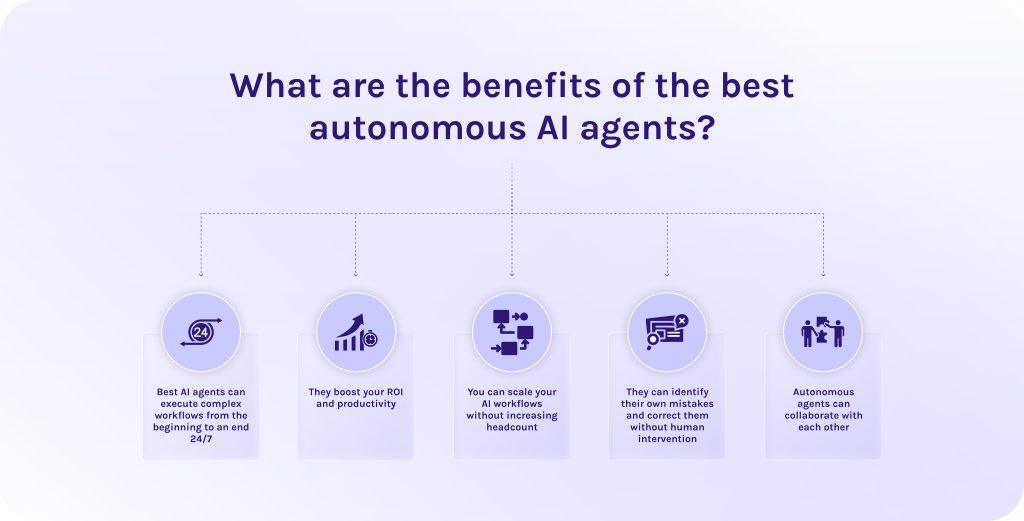
Specialized AI agents move from just simple prompt responding to almost full autonomy. They can break down complex goals to distribute tasks between each other and adjust on the fly to changes and improvements. But these aren’t the only benefits autonomous agents can offer.
- Best AI agents can execute complex workflows from the beginning to an end 24/7. Standard AI waits for a human prompt at every turn. Autonomous agents require only a high-level objective. They will independently browse the web and execute the workflow from start to finish without any bottlenecks.
- They boost your ROI and productivity. Top autonomous AI agents take over repetitive workflows and, thanks to it, they can free human teams. Team leaders now can focus more high-level strategy and problem-solving.
- You can scale your AI workflows without increasing headcount. During human history, expanding business operations meant a linear increase in hiring and training costs. However, today, if you want to scale your operations, you can simply deploy additional specialized AI agents to handle sudden spikes in customer support or data processing.
- They can identify their own mistakes and correct them without human intervention. The best autonomous AI agents possess internal feedback loops. If an agent encounters a broken API link or, for instance, a coding bug while working, it analyzes the error and self-corrects in real time to ensure an accurate final output.
- Autonomous agents can collaborate with each other. Companies can orchestrate a network of specialized AI agents where one agent acts as a researcher, another acts as a writer, and a third acts as a quality assurance editor.
Read More: Agentic AI in Software Development: Transforming Modern Engineering
What are the best autonomous AI agents? Our comprehensive review and ranking
1. EpicStaff
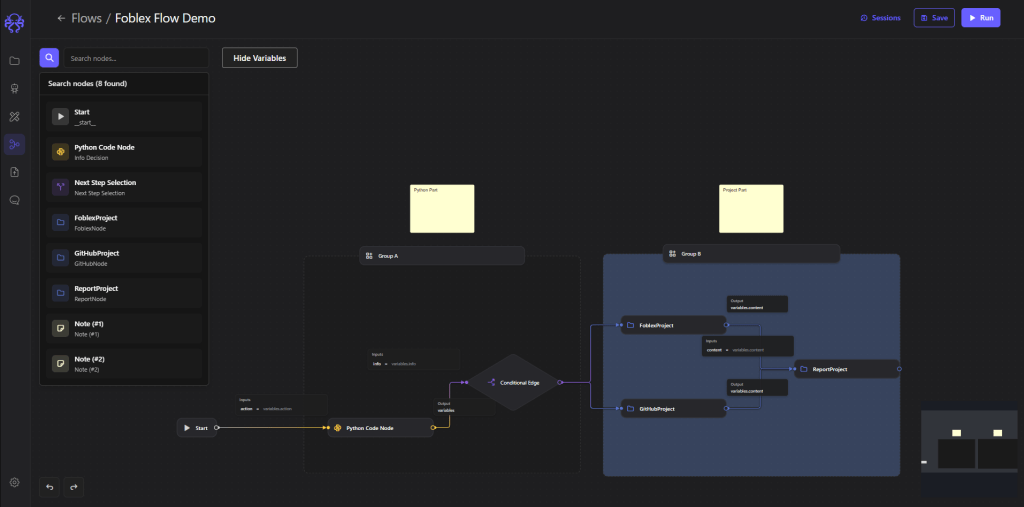
EpicStaff heads our list of top autonomous AI agents platforms. It is an open-source solution designed to help teams of different sizes (from large enterprises to individual developers) to build their own business process automation workflows. You can simply host it yourself and customize for your specific needs. It allows technical teams to inject custom Python logic and connect internal systems via the Model Context Protocol (MCP). At the same time, it gives operations and audit teams a visual node interface to monitor and manage the active AI workforce.
Best for
Teams that need a tool for dual audience – technical and non-technical specialists to work in a single workspace.
Key Features
- Python logic injection. Developers can write custom Python code and functions directly into any workflow node.
- Enterprise-grade security. Runs completely on your own infrastructure (Docker) with step-by-step audit logs for compliance.
- Node-based logic. A drag-and-drop visual workflow builder that allows operations teams to configure complex multi-agent processes without coding.
Pricing
This AI agent orchestration platform is completely free. You can download it from its GitHub repository.
Pros
- Gives you a complete control over data privacy because it is hosted locally or in your private cloud.
- It combines code-free visual design with highly technical Python capability.
- It includes Model Context Protocol (MCP) and advanced RAG (GraphRAG) support.
Cons
- Requires development resources to initially set up and create custom integrations.
2. Reclaim.ai
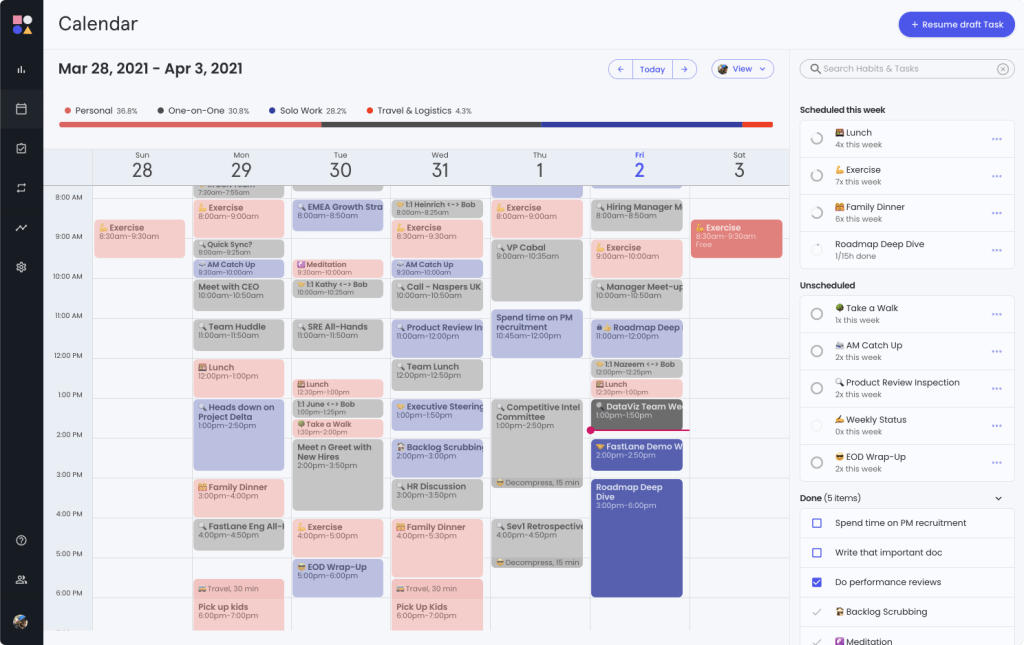
The second platform with best AI agents for business is Reclaim.ai. It is a time-blocking assistant that can automatically map out your tasks and shift your schedule in real time as new meetings pop up. Thanks to this autonomous assistant, you never have to sacrifice productivity for a crowded inbox.
Best for
Busy professionals and teams overwhelmed with meetings who want an automated calendar assistant to optimize their time.
Key Features
- Project management integrations. Seamlessly syncs with Jira, Asana, Todoist, ClickUp, and Linear.
- Smart time-blocking. Automatically transforms task lists and habit lists into dynamic blocks on your calendar.
- Rescheduling that you can adapt to your needs. Automatically shifts your task blocks if an unexpected meeting or conflict is scheduled over them.
Pricing
- Lite: $0 (Basic smart scheduling, up to 3 habits).
- Starter: $10 per seat/month.
- Business: $15 per seat/month.
- Enterprise: $22 per seat/month.
Pros
- Cuts down on manual day-planning.
- Prevents employee burnout.
- Excellent integrations with popular productivity tools.
Cons
- Relies primarily on Google Calendar and Outlook.
- AI scheduling automation can occasionally feel opaque.
3. Aisera
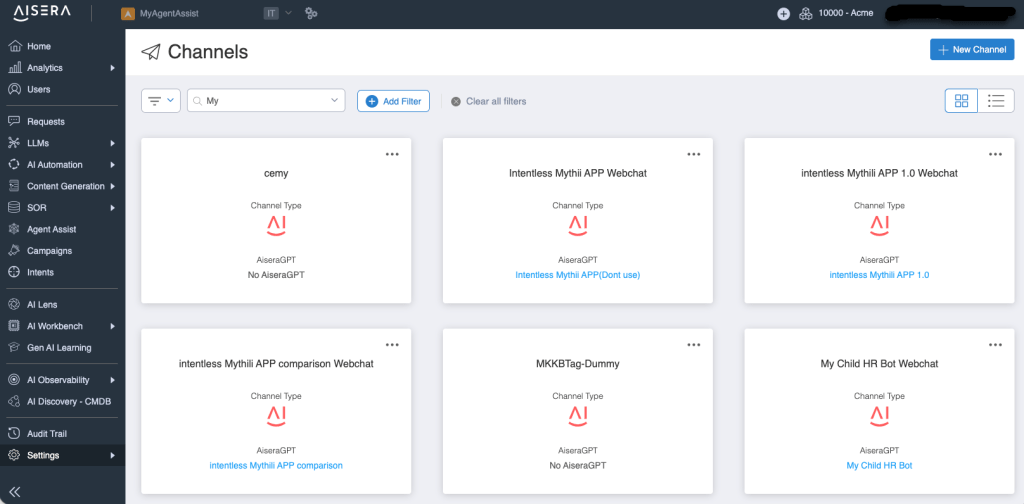
This AI agent platform is an AI-native service management platform built specifically to automate internal IT helpdesks, HR requests, and customer service operations. Its autonomous agents can detect user intent, which helps large organizations execute complex operational workflows across legacy enterprise applications.
Best for
Large enterprise organizations looking to deploy an automated service desk.
Key Features
- AI virtual assistant. Smart conversational agent that can diagnose employee issues and create tickets in natural language.
- Intent detection. AI workflow instantly reads and automatically routes unstructured user queries to the correct knowledge documents or workflows.
- Workflow automation. Seamlessly connects to platforms like ServiceNow, Salesforce, and Jira to independently execute structured back-end tasks.
Pricing
Has custom pricing. You should contact the vendor directly.
Pros
- Reduces operational support costs.
- Provides out-of-the-box support for enterprise software systems.
- Supports flexible deployment structures.
Cons
- High barrier to entry.
- Demands a complex initial implementation phase.
4. Moveworks
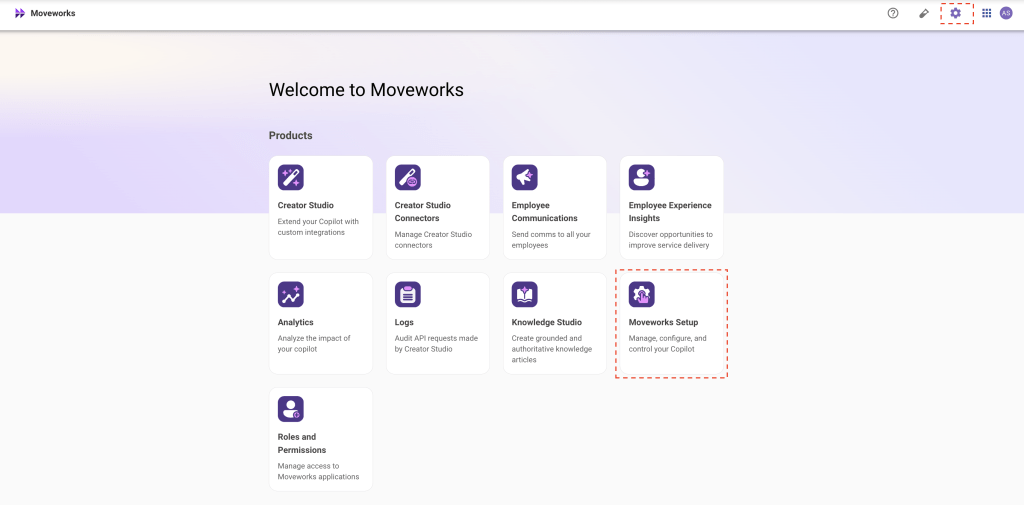
This AI agent orchestration platform seamlessly integrates with ServiceNow and leverages a sophisticated multi-LLM reasoning engine to let employees find information and trigger complex backend tasks across all corporate apps.
Best for
Scale-ups and large enterprise teams that want to centralize their internal support.
Key Features
- Conversational reasoning engine that uses multiple large language models at once. This AI agent platform understands complex natural language to solve varied employee requests across multiple enterprise applications simultaneously.
- Moveworks Agent Studio. A low-code builder environment that enables developers to test and deploy customized internal enterprise AI agents with over 100+ pre-built third-party connections.
- Unified enterprise search. Crawls and retrieves answers instantly across deeply fragmented data sources.
Pricing
Has custom pricing. You should contact the vendor directly.
Pros
- Users admit its exceptional UX.
- Deep synergy with ServiceNow ecosystem.
- Seamlessly handles multi-language requests.
Cons
- Setup requires extensive API mapping and data governance policies.
5. Lindy
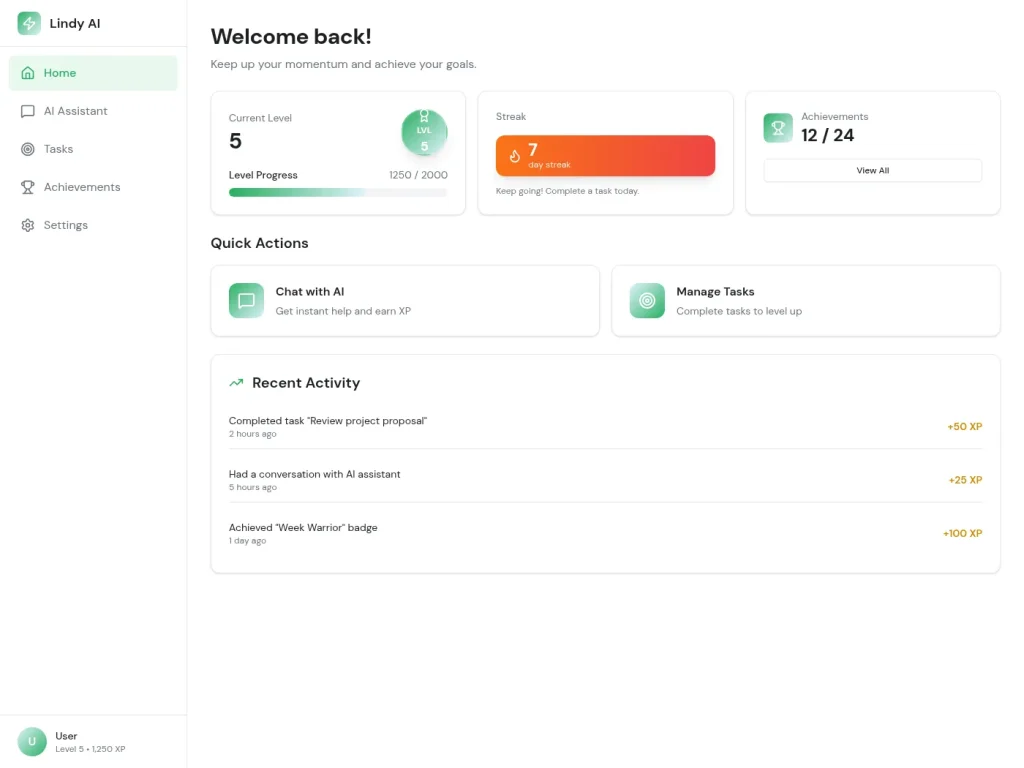
Lindy is a no-code AI agent orchestration platform designed to create specialized digital workers in plain English. It is an ideal solution for operational agility as it allows users to connect agents with thousands of popular applications and deploy them across voice or chat channels.
Best for
Small-to-medium businesses and operations teams who want to build and deploy custom AI assistants rapidly without relying on developers or code.
Key Features
- No-code workflow builder. This agentic workflow builder allows you to configure fully functional agents. You just need to write instructions in natural English.
- Huge ecosystem of integrations. Has 4,000+ native integrations with popular SaaS tools like Gmail, Salesforce, Slack, HubSpot, and Google Calendar.
Pricing
- Plus: $49.99 / month.
- Pro: $99.99 / month.
- Max: $199.99 / month.
Pros
- Offers free trial.
- Low entry point. The tool doesn’t require coding skills.
- Compliant with top-tier security standards.
Cons
- The credit-based usage system can make monthly software expenses highly unpredictable.
- Lacks the deep visual node-debugging interfaces.
Read More: Top 10 AI Software Development Companies (2026 Guide)
What are the main challenges in implementing best autonomous AI agents?
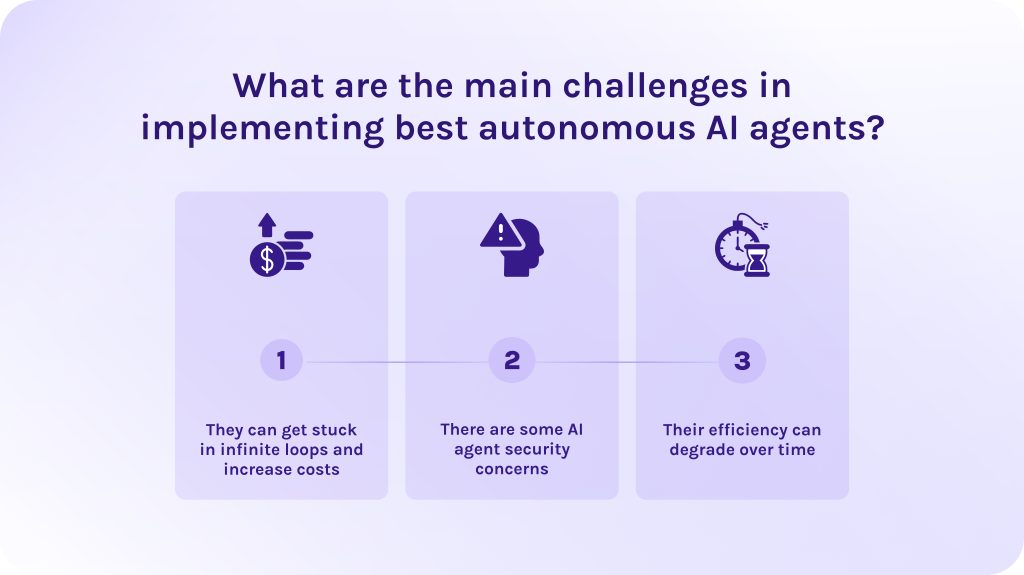
With all the benefits and positive sides described above, implementing multi-agent orchestration into your workflows comes with several challenges as well.
- They can get stuck in infinite loops and increase costs. Because enterprise AI agents determine their own step-by-step execution paths, they can easily get stuck in infinite reasoning loops. Consequently, it makes inference costs highly unpredictable and difficult to budget at scale.
- There are some AI agent security concerns. If you give autonomous agents API access to modify databases or move money, it creates massive security risks. However, enterprises still struggle to define strict identity and permission boundaries for enterprise-grade agentic workflows.
- Their efficiency can degrade over time. When enterprise AI agents are exposed to too many corporate tools and legacy systems simultaneously, their decision-making accuracy degrades. Consequently, it leads to the chain reaction when a single hallucination or mistaken step cascades silently across multiple integrated workflows.
Read More: 10 Zapier Alternatives You Should Be Using
Conclusion
Multi-agent orchestration has become a backbone of highly accurate and extremely efficient business processes, and this tendency will only grow. Thus, today, the question is no longer whether to adopt agentic AI, but how quickly you can wrap them in a tool for maximizing AI agent ROI while ensuring total security. The businesses that master this architecture today will set the pace for industry innovation tomorrow.
If you look for a robust yet flexible solution, contact EpicStaff professionals to learn more about the ways this platform can increase efficiency of your workflows.
FAQs
1. What is the best autonomous AI agent?
EpicStaff has proven itself to be one of the best autonomous multi-agent orchestration systems. It is suitable for an extremely wide audience from HR managers to software developers, thanks to its intuitive visual interface and, at the same time, ability to create custom code to expand the tool’s capabilities. You can create your own small projects in EpicStaff by just downloading it from the GitHub repository or automate time-consuming business processes in huge, highly regulated enterprises.
2. What are the top 5 AI agents to build to improve your PM work?
From our analysis we can recommend EpicStaff, Lindy, Moveworks, Reclaim.ai, Aisera for efficient project management.
3. Which AI agents are free?
- EpicStaff – This is an open-source multi-agent orchestration platform for businesses of almost any size and audience with a different technical background or even without it. It is completely free to download from GitHub and self-host on your own infrastructure.
- CrewAI – This framework is 100% free and open-source under the MIT license. It allows developers to build complex multi-agent teams without any licensing costs.
- n8n – This solution for creating the best autonomous AI agents is completely free. You can host it on your own servers and create agentic workflows with the help of visual workflow builder and Advanced AI suite.
4. What AI is better than ChatGPT?
- Claude – This agentic AI platform leads the industry on deep reasoning benchmarks like SWE-Bench. Its writing style is widely considered much less “robotic” and more naturally human than ChatGPT’s.
- Gemini – Gemini features a massive 2-million-token context window, meaning you can upload entire video files, hours of audio, or thousands of pages of code repositories at once. It also integrates seamlessly across Gmail, Docs, and Google Drive.
- Perplexity – It automatically structures search results, lists transparent, clickable inline source citations, and creates organized research workspaces called “Spaces.”
5. What are the 4 types of agents?
When we’re talking about types of AI agents, usually, we can distinguish the following ones:
- Simple reflex agents: They react instantly to current sensory data using preset “if-then” rules, completely ignoring history or future consequences.
- Model-based reflex agents: They keep track of a changing environment by maintaining an internal memory of things they can no longer see.
- Goal-based agents: They plan several steps ahead and choose actions specifically to achieve a defined objective.
- Utility-based agents: They use a mathematical scoring system to measure specific success criteria, which allows them to choose the absolute best path among multiple successful options.
6. Which is the most powerful AI agent?
EpicStaff is a relatively new player in the market but it already has shown great results in highly regulated industries like logistics and defence. It is one of the best autonomous AI agents in 2026 whose main strength lies in suitability for both technical and non-technical specialists, making cross-department collaboration more effective.
7. What is the best AI for autonomous coding?
- Devin – This is one of the best AI coding agents that is capable of handling complex engineering repositories, running its own terminal, and fixing software bugs end-to-end like a human teammate.
- Cursor – Users name this platform as one of the best AI coding agents that can dynamically edit, create, and connect source code files across your entire local workspace in real time.
8. Which 3 jobs will survive AI?
In 2025, the co-founder of Microsoft Bill Gates said that only three jobs will survive AI:
- Coders: Even though AI can generate code, humans are still required to understand complex system architectures, maintain cybersecurity, and write the foundational logic that tells the AI what to build in the first place.
- Energy experts: Servers for AI require lots of energy to train and run advanced AI models. Thus, it triggers an unprecedented global power crisis, which makes experts in renewable energy and grid infrastructure essential to keep the digital world running.
- Biologists: Understanding the human body and fighting diseases require physical experimentation and clinical judgment that software alone cannot replicate.
9. Is it possible for AI to code itself?
Yes, AI can absolutely code independently. Best autonomous AI agents for developers use self-evolving loops to write, test, debug, and optimize their own software. They can fix bugs and optimize algorithm efficiency.
10. What is the 30% rule for AI?
The rule of 30% for AI is a framework for efficient collaboration between humans and AI . It suggests that AI should handle roughly 70% of tasks while humans retain the remaining 30% for critical thinking, oversight, and ethical judgment.
If we’re talking about enterprise engineering, it can also refer to the architecture rule where 70% of an AI agent’s workflows are built deterministically for predictability, leaving the LLM to dynamically handle the remaining 30% of edge cases.
References
- https://www.gartner.com/en/articles/hype-cycle-for-agentic-ai
- https://www.sciencedirect.com/science/article/pii/S1566253525006712
- https://www.tandfonline.com/doi/abs/10.1080/08874417.2025.2483832
- https://books.google.com.ua/books?hl=en&lr=&id=B7khAwAAQBAJ&oi=fnd&pg=PR7&dq=ai+agents&ots=_5iUONAJkw&sig=6aOlL_AEOT2tVCWYGW5_OBwCnJE&redir_esc=y#v=onepage&q=ai%20agents&f=false
- https://www.researchgate.net/publication/391373257_AI_Agents
- https://www.researchgate.net/publication/394539994_A_Comprehensive_Review_of_AI_Agents_Transforming_Possibilities_in_Technology_and_Beyond
- https://www.researchgate.net/post/AI_Agent_vs_Agentic_AI_Explained_Key_Differences_Use_Cases_Future_of_Autonomous_AI
- https://www.researchgate.net/publication/389738694_Artificial_intelligence_agents_and_agentic_workflows_the_new_frontier_of_automation