
Main Logistics Trends Transforming the Industry
Trend №1: Digitalization and Data-Driven Logistics Operations
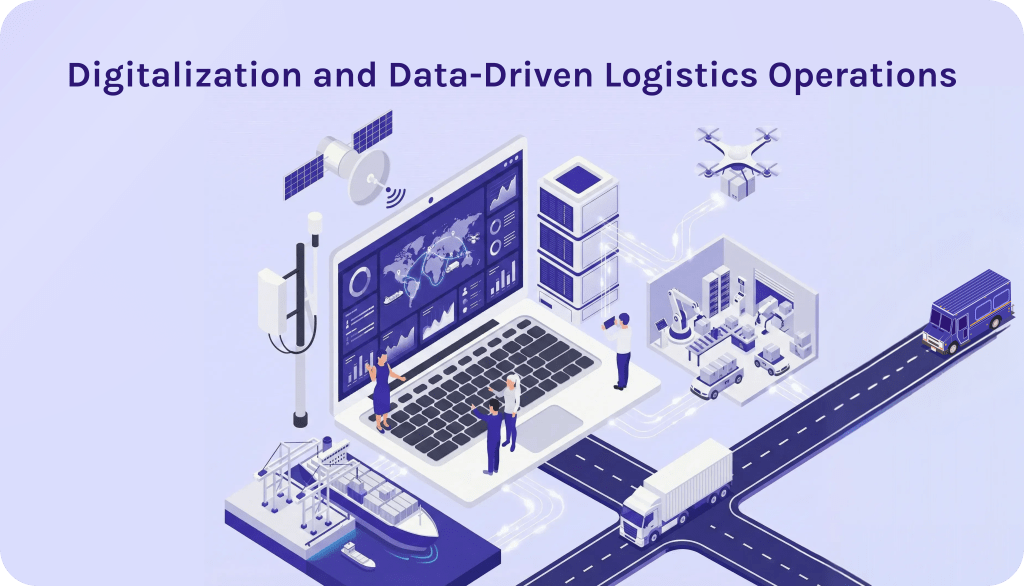
In present days, if you rely just on the systems that companies have been using for years, you are likely to fall behind. Without proper oversight, logistics operations quickly become inefficient, leading to delays or even supply chain disruptions. This is the main reason why you may hear about artificial intelligence (AI) [1] from every corner of the Internet.
If we talk about traditional AI, it gives the opportunity to automate various processes from reporting to demand forecasting based on historical or real-time data. However, in 2026, even this logistics trend will move towards generative and agentic AI. As SupplyChain360 report [2] says:
- Nearly 67% of executives believe that agentic AI will significantly increase productivity indicators.
- 58% of executives think it will transform the core supply chain frameworks.
But why so? Well, the answer is quite simple – proofs. IBM reports that:
- Organizations that invest more in agentic AI in logistics observe higher revenue growth compared to the others – up to 61%.
- 62% of supply chain operators report that if implemented well, AI agents improve the quality and speed of processes.
- Around 76% of CSCOs report increased efficiency due to tasks automation.
Thanks to AI agents that combine agentic and generative approaches, logistics companies get autonomous systems that carry out tasks and make decisions on their own with minimum dependence on human input, which pays off in increased cost efficiency and much more optimized operations.
Read More: Supply Chain Digital Transformation: Everything You Need to Know
Real-World Example of Agentic AI in logistics
As a real-world example of efficiency of AI agents, we can mention EpicStaff – AI agent orchestration platform developed by HYS Enterprise. Developed in 2024, it has already proven its efficiency in practice. In 2024, EpicStaff had a collaboration with Dutch logistics company Move Your Machine (MYM) to help them create an absolutely new intelligent logistics system.
As an alternative to heavy ERP solutions or relying on the legacy software, EpicStaff offered a scalable solution which represents a team of digital employees that can take autonomous actions and decide how to execute tasks on their own. For instance, specifically in logistics they can:
- Monitor shipments in real time and reroute them in case of delays or disruptions.
- Generate and process logistics documentation.
- Trigger alerts and initiate contingency workflows when detects risks.
In the MYM’s case, in collaboration with EpicStaff they created autonomous AI-powered logistics system capable of:
- Automating up to 90% of processes, providing full transparency at the same time.
- Delegate almost all tasks to AI agents and perform with a team of only two people.
- Save almost 40% of delivery time.
- Provide quality customer support 24/7.
If you want to start a digital transformation but don’t know what to begin with, contact experts from HYS Enterprise.
Read More: FiLogic: An All-in-One Cloud-Based Transportation Management System
Trend №2: Automation and Robotics in Logistics Companies
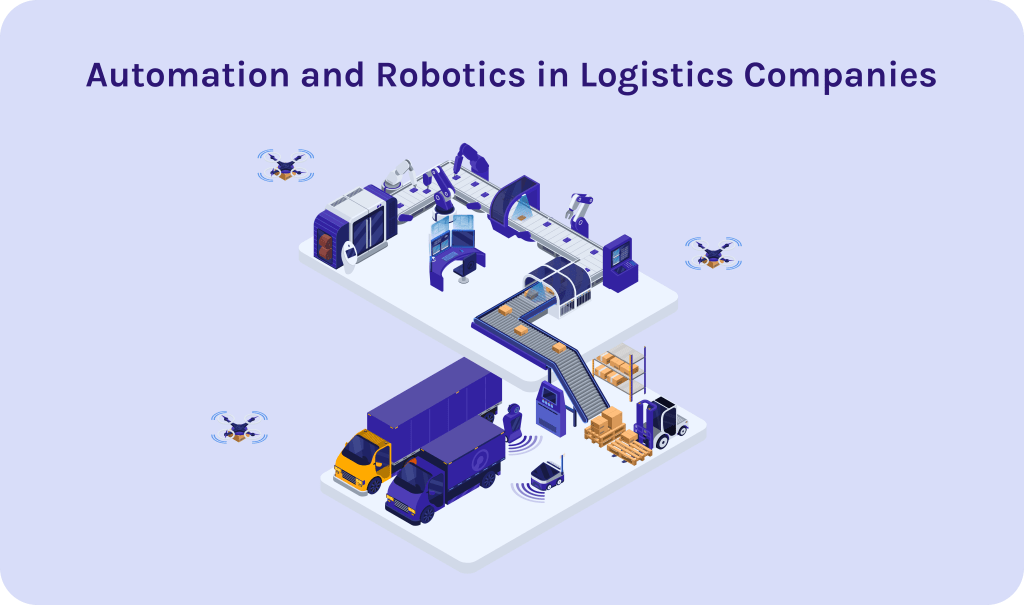
Some trends in transportation and logistics are addressing the evolving problem of the shortages of skilled workers [3]. While you need to train your employees to work with new technologies, robots can take over time-consuming or physically demanding tasks, thereby decreasing the need for manual work.
The Grand View Research report estimates that the global logistics robot market is projected to reach $35 billion by 2030, growing at a CAGR of about 15.9 % [4]. Why so? Let’s take a look at some examples.
Collaborative robots (Cobots) [5] are robots that interact directly with humans to help perform tasks more efficiently and safely. They are designed to be human assistants, not to replace people completely. To be more precise, cobots can help with:
- Picking and packing orders in warehouses.
- Moving goods between stations.
- Loading and unloading shipments.
- Supporting last mile preparation and assembly.
Trend №3: Sustainability and Green Logistics

Over the last years, green technologies have become extremely valuable in terms of fighting consequences of global warming and environmental pollution [6]. Despite this, more companies within the logistics industry are investing in sustainable solutions because the long-term benefits outweigh the upfront expenses. To implement sustainable logistics trends, companies are:
- Switching to alternative energy sources. Even partial transition to wind, water, or sun energy can help reduce your carbon footprint.
- Fostering the culture of circular economy. It means they focus on activities that help reuse, recycle, and reduce production waste throughout the entire lifecycle.
- Using alternative fuels. Switching to electricity or green methanol in the logistics industry significantly improves situation with green gases.
- Using sustainable warehousing. Powered from renewable energy resources and built from sustainable materials instead of plastic, warehouses can consume less energy and produce less waste.
Thus, sustainable logistics isn’t just a trendy thing – it is a must for our future and health.
Trend №4: Last Mile Deliveries as a Competitive Advantage
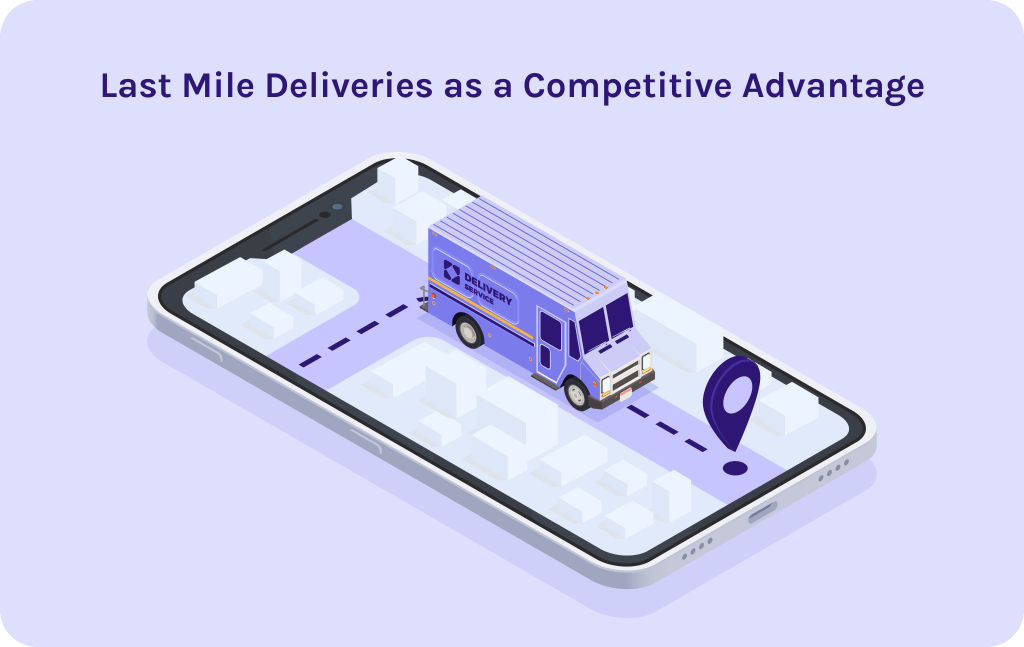
Imagine that dozens or even hundreds of drones could handle parcel deliveries, thereby reducing delivery times from hours to minutes, without staying in the traffic jams and with much lower carbon emissions – this is what last-mile delivery logistics trend exactly is [7].
If coupled with autonomous ground vehicles and AI-powered route optimization, last-mile deliveries will become indispensable. Some major market players like Amazon, Walmart, and FedEx are already operating over 2000 robots and 800 drones between the biggest US cities . These robots can complete nearly 100,000 deliveries every day [11].
Read More: Logistics Management Software: Complete Guide for Modern Supply Chains
Trend №5: Customer-Centric Logistics Models
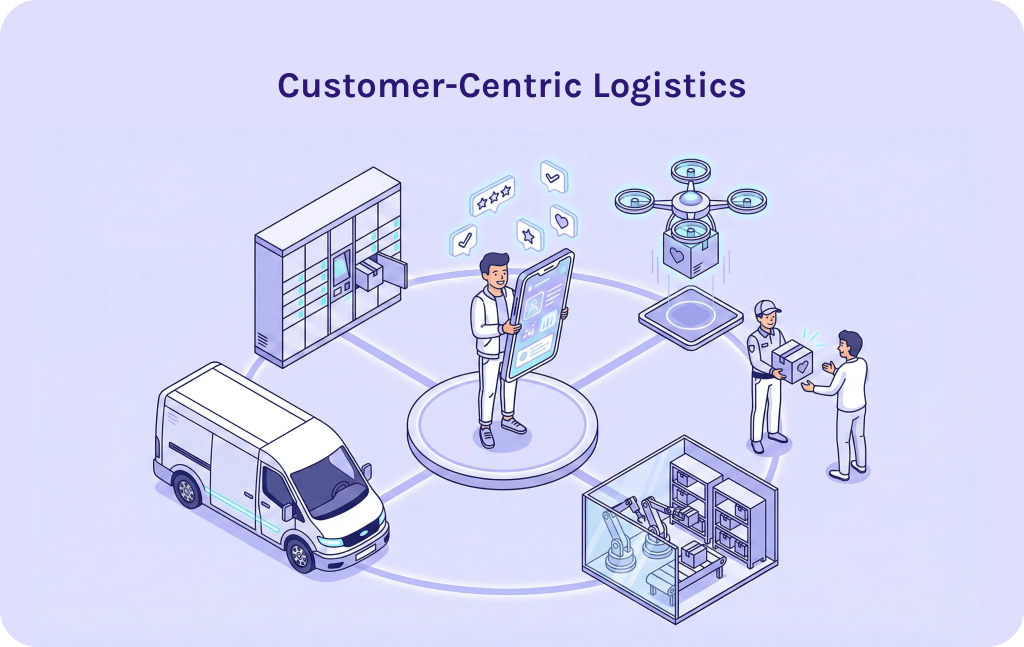
In simple terms, customer-centric logistics [8] means designing logistics operations around the needs and pain points of your potential customers to deliver the maximum strategic value. When supply chain leaders set customer preferences as a top priority, they can make clients more satisfied and loyal.
However, achieving true customer-centric logistics doesn’t mean only the fast delivery. It also needs rethinking transportation and logistics processes from order placement and inventory availability to last mile deliveries and post-purchase support to respond quickly to the feedback and make changes accordingly.
Trend №6: Elastic Logistics
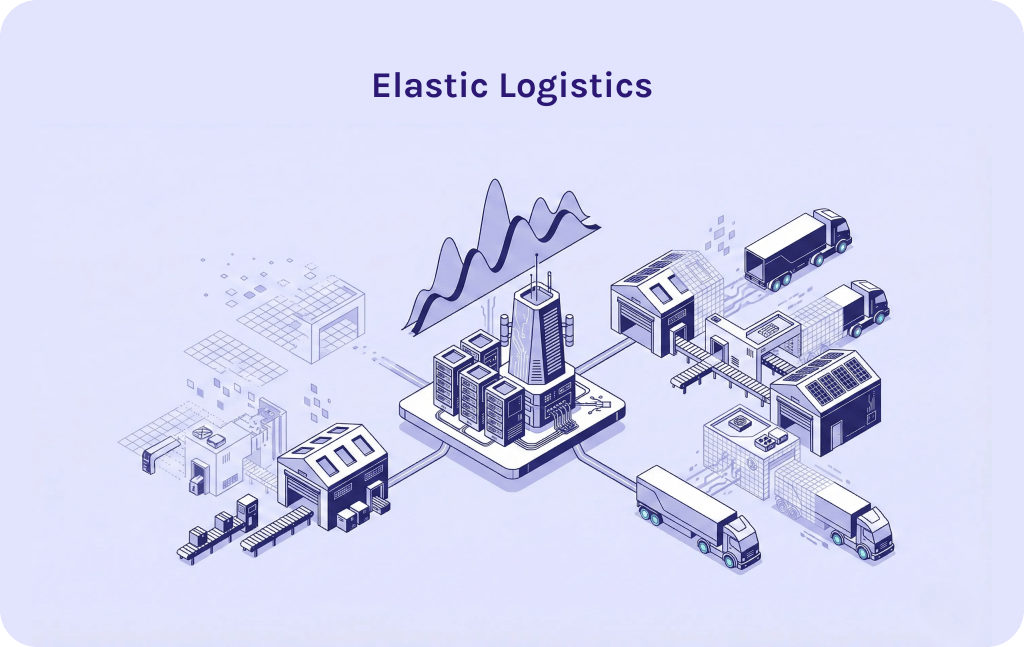
From the other new trends in logistics, elastic logistics [9] stands out for offering a flexible, agile approach to managing logistics operations. The idea is similar to the concept of “elasticity” in cloud computing: resources can automatically expand or contract in response to demand, ensuring efficiency and responsiveness without over-investing in infrastructure.
Why must companies adapt elastic logistics?
- It helps to address the problem of seasonal demand changes or market fluctuations.
- Companies can collaborate with many third-party vendors, staying on track with the vendor-neutrality approach.
- AI and advanced algorithms can automatically adjust routes.
In other words, elastic logistics makes supply chains more responsive and able to quickly adapt to market changes and customer expectations.
Read More: AI and the Future of Modern Logistics
Trend №7: Hyperlocal and Micro-Fulfillment Networks

This point from our logistics trends list is more about redefining proximity and speed in modern logistics operations. Rather than focusing on large regional distribution centers, hyperlocal and micro-fulfillment networks prioritize placing inventory near the end customer as close as possible.
Why does it matter?
Because proximity directly impacts delivery speed, affecting, as the result, also customer satisfaction. The closer inventory is to the end customer, the shorter the transportation route, which means faster deliveries and lower fuel and operational expenses. The benefits of this approach are the following ones:
- Better inventory control.
- Much higher picking accuracy.
- Way more effective use of available space.
- And less operational friction brought on by customer interaction and in-store traffic.
Trend №8: Logistics-as-a-Service (LaaS)
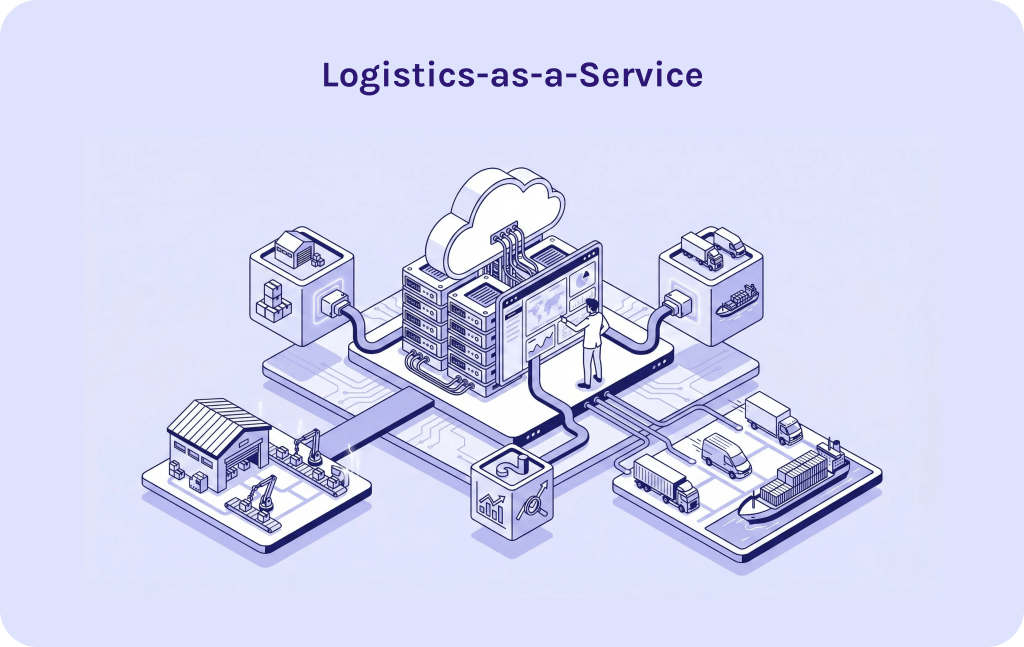
Logistics-as-a-Service (LaaS) is emerging as a major trend in the transportation and logistics industry that allows companies to outsource parts or all of their supply chain operations. Accenture research [10] shows that up to 91% of companies acknowledge that the customer need for end-to-end logistics services has increased dramatically. And we know why.
Imagine that you don’t need to deploy your own transportation management system (TMS) because instead you can access a cloud-based platform that handles shipment planning, route optimization, inventory tracking, and carrier coordination in real time. With LaaS, all logistics processes are managed through a single digital interface, giving companies full visibility and control without the heavy upfront costs of building their own infrastructure.
Read More: Digital Transformation in Logistics: From Traditional Operations to Real-Time Supply Chains
Future Outlook: What’s Next for the Logistics Industry?
Logistics, as every other industry continues to evolve and grow rapidly. Thus, every trend from the list of logistics trends that was described above is going to mature as well. Thus, in the near future, we are expecting:
- AI maturity. Artificial intelligence is now still used by many companies only for automatic reporting and analytics, although modern models capabilities go far beyond these functions. AI will become more and more autonomous, decreasing the dependence on humans as well as making their own decisions. These systems will be able not only analyze routes and supply chain disruptions but take actions to optimize issues immediately on their own.
- Autonomous transport. We can expect that autonomous vehicles will move from pilot programs to large-scale deployment. Regulations become clearer and technology improves, autonomous transport will help address driver shortages and enable 24/7 delivery capabilities [13].
- Hyper-local fulfillment. This trend will continue to expand, especially as consumer demand for same-day delivery grows. Companies will increasingly position inventory closer to end customers using compact, automated fulfillment centers located in urban hubs [14].
If supply chain leaders follow top logistics trends, they will, consequently, stay competitive and become major players within the chosen niche.
Conclusion
If we conclude everything said above:
- Agentic and generative AI are transforming logistics operations by automating up to 90% of processes and enabling autonomous decision-making.
- Cobots and autonomous vehicles help address the issue of labor shortages and increase efficiency and safety of delivery operations.
- Green logistics is as necessary as breathing to meet regulatory requirements and reduce the carbon footprint.
- Last mile deliveries speed up shipments and make services more reliable.
- Designing logistics around customer needs enhances satisfaction and loyalty as well as makes your market position more resilient.
- Demand-driven logistics networks allow companies to scale operations up or down to improve efficiency and responsiveness.
- Placing inventory closer to customers improves delivery speed and operational efficiency.
- Cloud-based logistics platforms reduce infrastructure costs and provide full visibility over the supply chain.
If you’re ready to transform your logistics operations and stay ahead of the competition, contact the experts at HYS Enterprise today.
FAQs
1. What are the main logistics trends today?
Now the industry is moving towards intelligent, AI-driven operations with focus on automation. As well, logistics operations gradually become more and more sustainable, supporting the global tendency for green technologies and taking care about the environment. Additionally, robotics, last-mile deliveries, elastic logistics, and logistics-as-a-service become a new norm.
2. What factors are accelerating changes in logistics industry trends?
The fact that logistics companies are forced to constantly deal with geopolitical shifts, uncertainty, ever-changing customer expectations, and labor shortages makes them rethink their approaches to logistics operations overall, thereby accelerating changes in trends and tendencies.
3. Are logistics trends driven more by technology or market demand?
Indeed, they are driven by both of these factors. On the one hand, quick technology shifts make companies rethink how their services should be developed and delivered, while on the other hand, market demand pushes companies to adopt new technologies faster than competitors.
4. How do logistics trends improve customer experience?
Latest trends in logistics make goods delivery faster and provide real-time tracking of shipments, giving customers the ability to continuously monitor their parcels. As well, in more advanced systems, companies provide personalized offerings to engage customers and improve overall satisfaction.
5. How do transportation and logistics industry trends affect delivery speed?
They significantly affect delivery speed by providing real-time logistics management and improving visibility throughout the entire delivery process. This, in turn, allows companies to quickly identify and resolve bottlenecks and build more efficient transportation routes.
6. How do logistics market trends influence workforce requirements?
The newest trends in logistics require more specific technical and industry knowledge as companies are implementing artificial intelligence, robotics, IoT devices, and other systems. Now the industry seeks specialists who can manage and optimize these technologies, analyzing data and efficiently operating supply chains.
7. What challenges do logistics companies face when adopting new trends?
Although adopting new technologies brings several benefits, it also comes with particular challenges that make logistics companies come up with new strategies to overcome them. These challenges are the following ones:
- High implementation costs related to development, initial setup, and training.
- Difficulties in integration with outdated legacy systems.
- Absence or lack of specialists with required skills.
- Concerns about the security of adopting these trendy technologies.
8. How do trends in logistics industry affect small and medium businesses?
Adoption of new technologies by small and mid-sized companies helps start with more affordable options and scale them further if needed to compete with larger market players without huge upfront investments.
9. What are the biggest risks of ignoring trends in logistics?
Without implementing trendy technologies companies risk to quickly fall behind the competitors. It can happen because of:
- Poor supply chain visibility.
- High cost of delays and compensations due to supply chain disruptions.
- Lower quality of services and lower customer satisfaction.
10. How are innovations and trends in logistics affecting inventory management?
Innovations in logistics allow companies to control inventory in real time, thereby reducing time that was previously spent on personal observation. As well, they enable just-in-time inventory and demand-driven replenishment which minimizes overstocking and stockouts.
11. Are global logistics trends different for B2B and B2C companies?
In fact, in B2C, trends in logistics are focused mostly on speed and last-mile delivery, whilst B2B trends emphasize addressing problems related to supply chain disruptions and cost efficiency as well as long-term partnership models.
References:
- https://www.researchgate.net/publication/395830747_A_Review_of_Agentic_Artificial_Intelligence_Power_of_Self-Driven_AI_in_the_Future_of_Financial_Autonomy_and_Enhanced_Customer_Engagement
- https://supplychain360.io/technology/ai-adoption-surges-in-supply-chain-networks/
- https://www.researchgate.net/publication/368493378_The_Causes_of_Labor_Shortage_in_the_United_States_and_Its_Impact_on_the_Supply_Chain
- https://www.grandviewresearch.com/industry-analysis/logistics-robot-market-report
- https://www.researchgate.net/publication/372790643_Collaborative_Robots
- https://www.researchgate.net/publication/384834807_GREEN_LOGISTICS_TRANSFORMING_SUPPLY_CHAINS_FOR_A_SUSTAINABLE_FUTURE
- https://www.researchgate.net/publication/345332518_Last-mile_delivery_concepts_a_survey_from_an_operational_research_perspective
- https://www.researchgate.net/publication/386046074_Customer-Centric_Supply_Chain_Strategies_for_New_Businesses
- https://www.researchgate.net/publication/380606921_A_Study_on_Elastic_Logistics_in_Supply_Chain_Management
- https://www.accenture.com/content/dam/accenture/final/a-com-migration/r3-3/pdf/pdf-165/accenture-logistics-service-expansion.pdf
- https://www.astuteanalytica.com/industry-report/autonomous-last-mile-delivery-market
- https://www.researchgate.net/publication/386351285_THE_LOGISTICS_PROCESS_AND_ITS_ROLE_IN_THE_ACTIVITIES_OF_MODERN_ENTERPRISES
- https://www.researchgate.net/publication/382599865_Introduction_to_autonomous_vehicles
- https://www.researchgate.net/publication/388399574_Hyperlocal_Delivery_Leveraging_Technology_to_Serve_Local_Communities