
What Is an AI Agent Management Platform?
AI agent management platform is a specialized software that allows organizations to create and continuously manage AI agents. You can imagine it as a central office of a big company somewhere in the centre of New York, where employees communicate with each other to make decisions and solve problems. In other words, it is a centralized software layer that allows organizations to deploy autonomous AI agents while maintaining oversight on their behavior, costs, and data access [4].
Companies often use the AI platforms to create their own workflows and organize them in a structured ecosystem, instead of building the entire software system from scratch.
Read More: Best Free ERP Software: Open Source and Free ERP Systems Compared
The 4 core pillars of an enterprise AI agent management platform
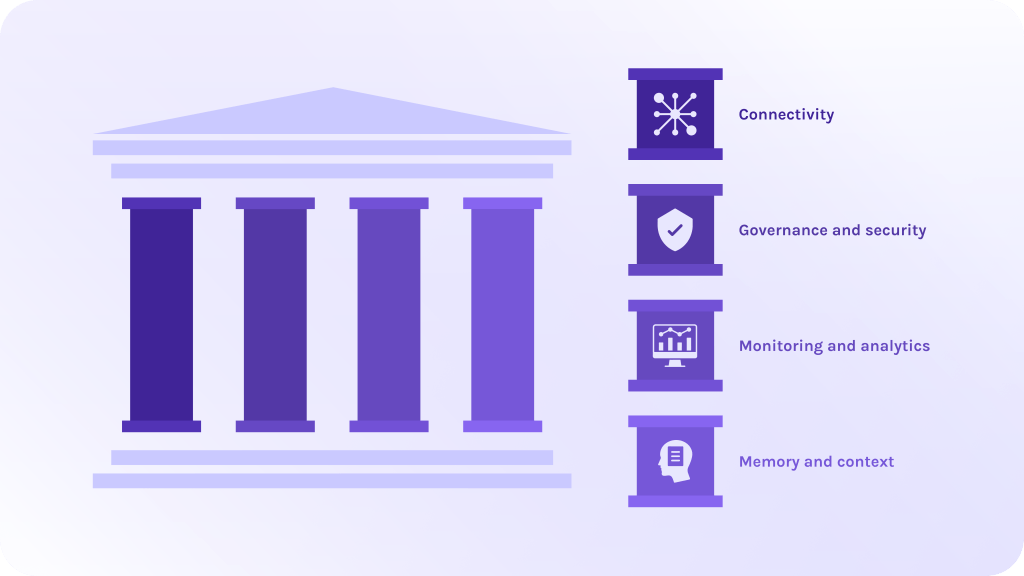
A true management platform provides four things that a simple chat interface cannot:
- Connectivity. The AI agent orchestration platform acts as the bridge between the AI backend and your company’s tools. It manages the APIs and permissions required for an agent to actually take actions like updating a lead or searching a private internal database.
- Governance and security. The AI platform ensures the agent follows strict rules and data privacy regulations but still requires a human manager to approve any action. It’s actually for the best because AI still can’t be 100% accurate or can’t fully understand human pain points or irrational behavior.
- Monitoring and analytics. Just as you track human KPIs, these platforms track agent KPIs like success metrics or how much money this specific agent is spending on compute.
- Memory and context. Standard AI often forgets once a conversation ends. An agentic AI management platform provides long-term memory, allowing an agent to remember a client’s specific preferences or the outcome of a project from six months ago [5].
Building an autonomous workforce is complex, and the cost of a “rogue” agent is high. Let our specialists guide you through the transition from legacy automation to agentic AI. Contact us today.
Read More: Best Scenario Planning Tools to Consider in 2026
How AI Agent Orchestration Works in Enterprise Environments
Okay, now, when you know the definition of multi-agent orchestration, let’s discuss how it works in practice.
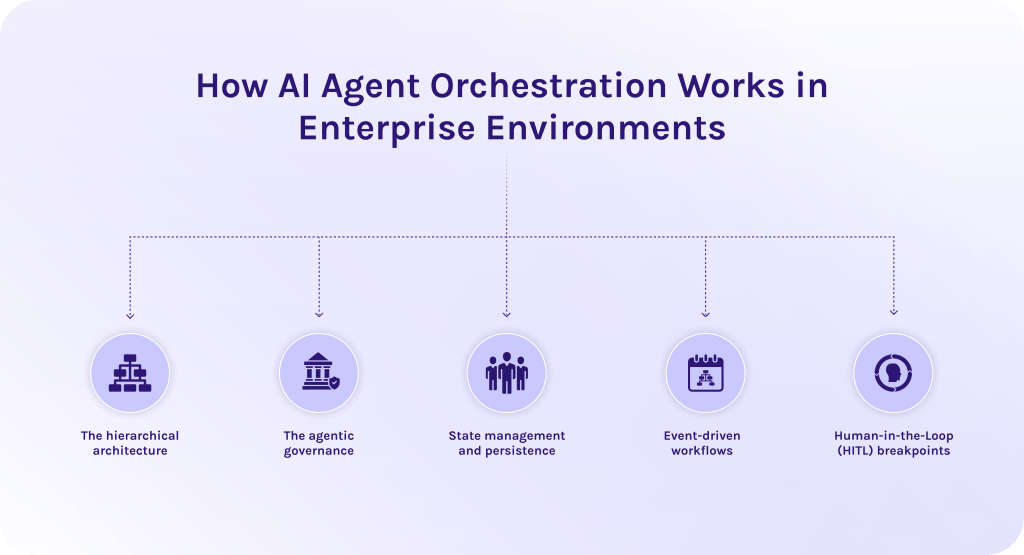
1. The hierarchical architecture.
Most enterprises have moved away from a model where one agent tries to do everything. Instead, they use a hierarchical team structure:
- The orchestrator. Receives high-level goals (e.g., “Onboard this new vendor”), breaks them into sub-tasks, and assigns them to specialists [6].
- Specialist agents. These are narrow agents – a Legal Agent to review contracts, a Finance Agent to check credit, and an IT Agent to provision access [6].
- Dynamic routing. The orchestrator ensures data flows correctly between specialists and handles bottlenecks if one agent hits an error [6].
2. The agentic governance.
In a 2026 enterprise stack, agents operate within a governance layer that enforces corporate policy:
- Each agent has its own role and responsibilities with specific permissions. An HR agent cannot accidentally access the engineering team’s private code.
- Some systems can automatically redact sensitive info (SSNs, trade secrets) before an agent processes it.
- Managers have a single dashboard to pause or rollback any agent fleet if anomalous behavior is detected [7].
3. State management and persistence.
Unlike basic AI, enterprise orchestration platforms use stateful execution. What does it mean?
- If a system crashes at step 8 of a 10-step process, the orchestrator remembers exactly where it was and resumes without wasting money on re-processing steps 1–7 [9].
- Agents share a context. When the Research Agent finds a data point, it posts it to the shared context so the Writer Agent can use it instantly without re-asking [8].
4. Event-driven workflows.
Modern enterprise agents act when something triggers them. They don’t just sit and wait for a user to type:
- An event is any significant change in a system that signals an action should happen. It can be, for example, a new customer order or a failed login attempt.
- These agents act like a digital nervous system, constantly scanning enterprise event streams to take action in real-time [10].
5. Human-in-the-Loop (HITL) breakpoints.
You can hear almost from every corner of the Internet that AI is going to replace humans in the near future. However, in reality, such programs still need human control to keep workflows safe and sound. Thus, AI agent management platforms are designed with specific breakpoints for human oversight.
- An agent can draft a $50,000 purchase order, but the orchestrator is hard-coded to pause and “ping” a human procurement officer for a physical signature before the transaction is finalized.
- Every “thought” the agent had is logged. If a mistake is made, compliance teams can make changes in the logic to see exactly where the reasoning failed.
Read More: Enterprise Workflow Automation: The Key to Scalable Operations
Why Operations Leaders Are Investing in Agentic AI Platforms
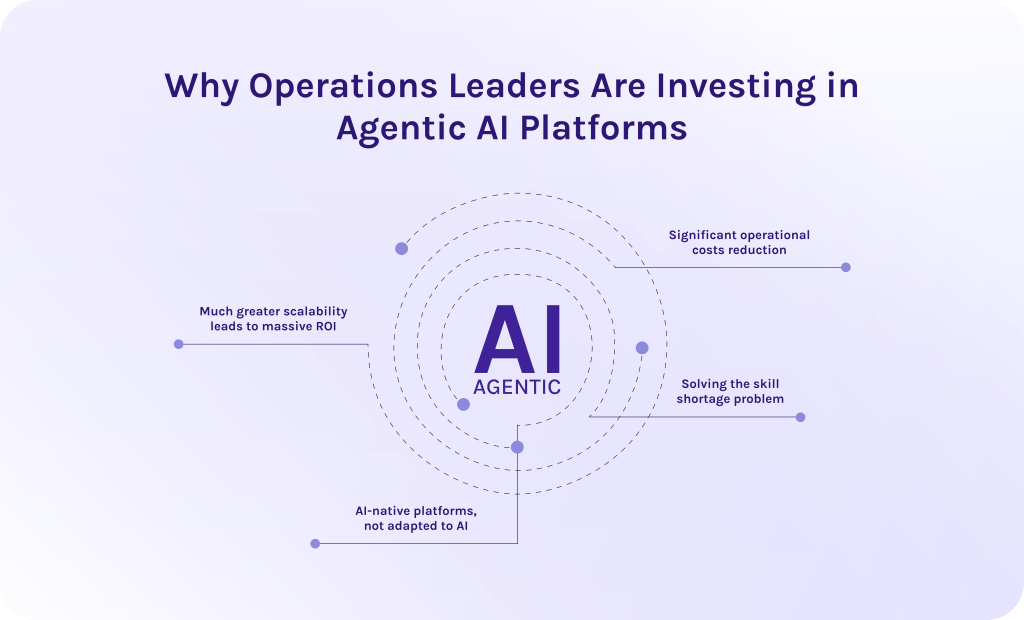
1. AI-native platforms, not adapted to AI.
Operations leaders have realized that AI-enabled legacy software is often too brittle for autonomous work. They are shifting toward AI-native platforms because when a business process or API changes, adapted systems break and require manual recording. AI-native architectures, in turn, are self-healing – the agents can reason through the change and adapt their own execution path without human intervention.
2. Much greater scalability leads to massive ROI.
Traditional operations scale linearly (more work = more people). Agentic AI platforms provide non-linear scalability, leading to the massive ROI seen in 2026:
- High-performing enterprises are seeing an average ROI of 4.5x by treating agents as a digital assembly line that runs 24/7 without fatigue [1].
- Early adopters report results like a 95% reduction in query time for internal data and 80% automation of transactional decisions [2].
3. Significant operational costs reduction.
We have seen this in our own experience, when the team of two people did the work of the team of 20, using our AI agent orchestration platform. Agentic AI cuts costs through three primary levers:
- Lower unit costs. The cost per resolution in customer support has plummeted from a human average of $15.00 to just $2.00 with agents – a 70-80% saving while maintaining higher accuracy [1].
- Cycle-time compression. Finance reconciliation cycles that previously took 4 days per month are now being slashed to under 6 hours using multi-agent orchestration [1].
- Error prevention. By automating high-stakes document matching and invoice scanning, some companies have reported saving tens of millions by eliminating the human error that leads to overpayments and compliance penalties [3].
4. Solving the skill shortage problem.
With record baby boomer retirements in 2026, enterprises are losing decades of institutional expert knowledge. Thus, leaders now are using agentic platforms to clone senior expertise. Junior staff now operate with “Expert-in-the-Loop” agents that have been trained on historical project data and senior planners’ decision logic. This transforms the role of humans from hands-on execution to high-level system design and oversight.
Read More: The Expert’s Eye: The Value of Architects
Key Features of an Enterprise AI Agent Management Platform
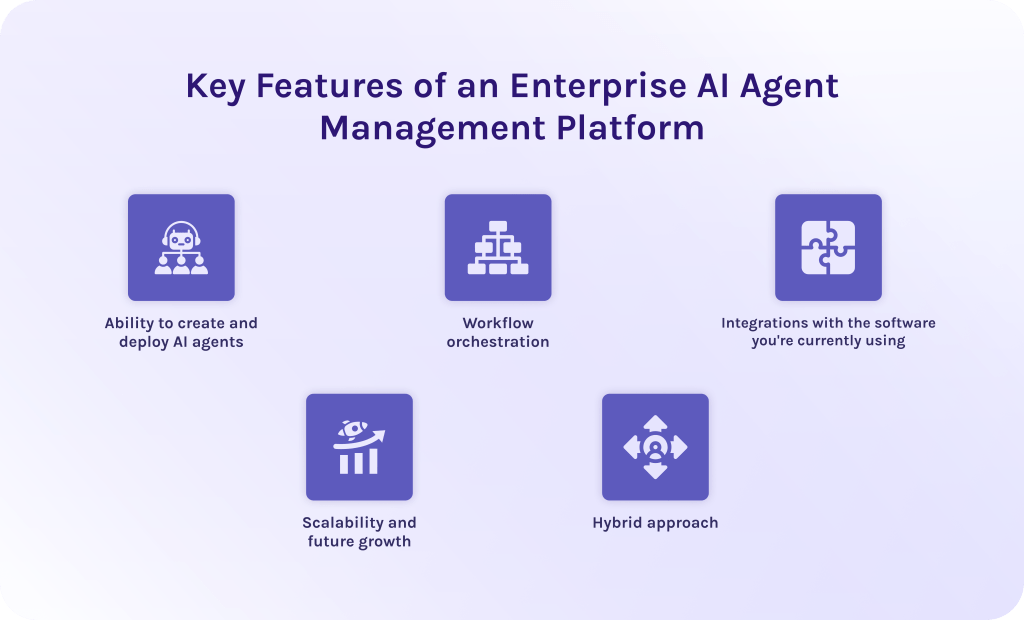
While creating this article, we’ve analysed requests of our target audience to understand what exact features companies are looking for in the AI agent management platform. Building on your list, here is the breakdown of these 5 key features as they function in a modern enterprise environment:
- Ability to create and deploy AI agents. An AI agent platform must allow both developers and business users to build agents without starting from scratch. This pays off in better collaboration and ability to create flexible workflows that would otherwise require significant development time and technical resources.
- Workflow orchestration. Orchestration ensures that multiple specialized agents can work together as a team rather than as isolated silos [14].
- Integrations with the software you’re currently using. It is as important as breathing. This feature allows companies to incorporate AI agents into workflows almost seamlessly not to ruin a perfectly built chain.
- Scalability and future growth. The agentic AI platform should be capable of supporting an increasing number of AI agents and more complex workflows without compromising performance or stability. This ensures that the platform can continue to support operations as the organization expands.
- Hybrid approach. When an intuitive interface is combined with the ability to add custom functions directly with code, both technical and non-technical users can collaborate more effectively while still maintaining flexibility for advanced customization and complex workflow development [11].
Read More: Empowering Your Workflow: Unveiling the Surprisingly Diverse Uses of Large Language Models
Top 5 Best AI Agent Management Platforms
1. EpicStaff
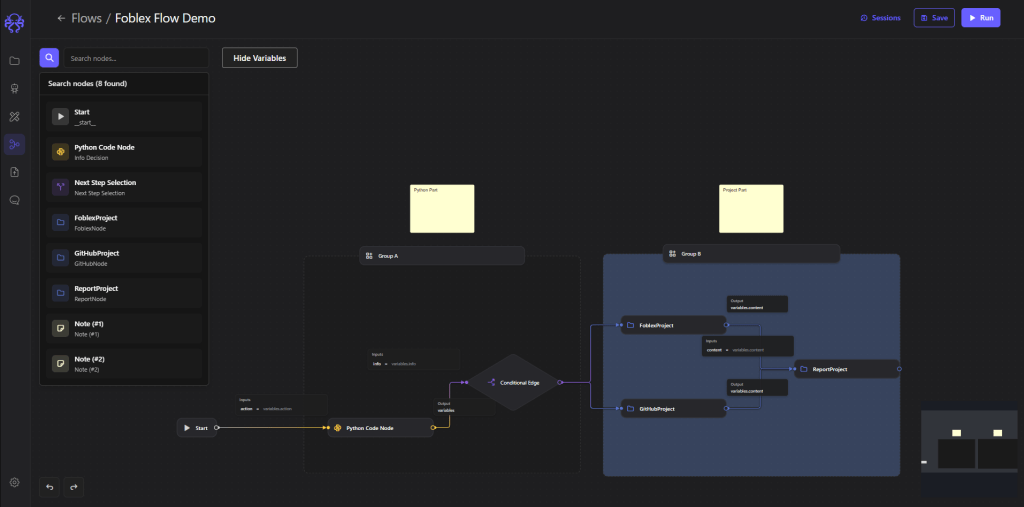
EpicStaff is a new market player who has already managed to collaborate with the well-known Netherlands logistics company Move Your Machine (MYM) to build a fully autonomous, enterprise-grade logistics solution. It bridges the gap between technical and business teams by combining a FastAPI backend with a visual workflow builder, enhancing no-code and technical specialists to optimize and scale workflows more efficiently.
Best for:
Creating “digital employees” that require complex, multi-step reasoning and a mix of no-code and pro-code control.
Main advantage:
It allows for highly customized multi-agent systems without the “black box” limitations of purely proprietary platforms.
Ready to see how EpicStaff can slash your cycle times by up to 80%? To experience the power of hybrid orchestration without the enterprise price tag book a call with our experts.
2. Stack AI
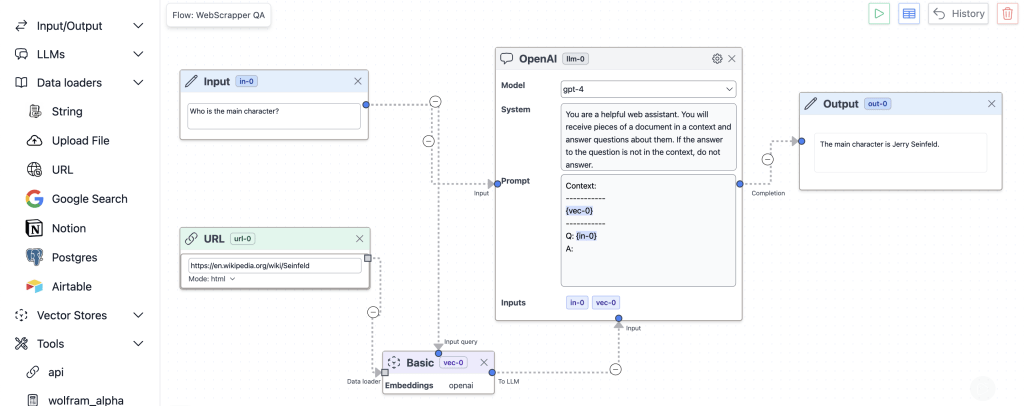
Stack AI is often the first stop for teams that want to build an agentic workflow as quickly as possible. This AI management software uses a node-based visual interface that makes connecting different LLMs to your internal data seamless.
Best for:
Internal business tools and companies that need to frequently “hot-swap” different AI models to find the best price-to-performance ratio.
Main advantage:
Its speed to deployment is nearly unmatched, especially for RAG use cases.
3. Merge
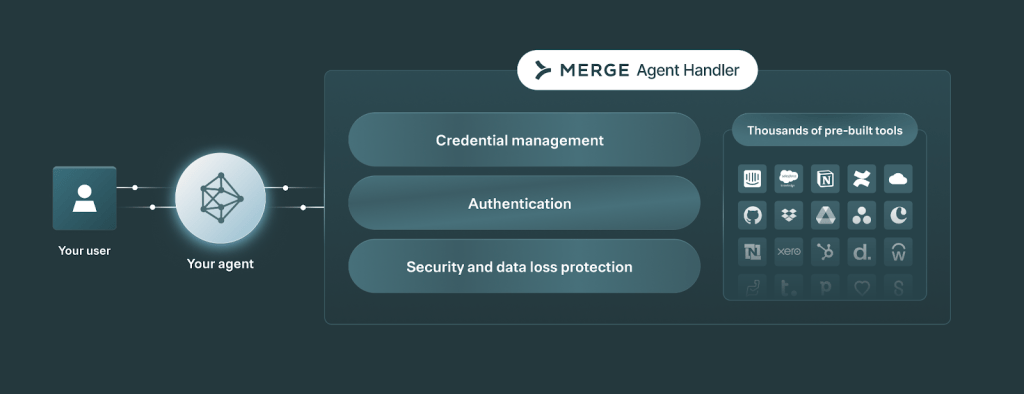
While others focus on the “brain” of the agent, Merge focuses on the “hands.” This AI platform provides a unified API layer that allows agents to securely interact with hundreds of different HR, payroll, and CRM tools.
Best for:
Enterprise-grade security and governance. This AI agent orchestration platform provides specific tools that strictly control what an agent can and cannot do.
Main advantage:
It centralizes all your third-party app connections in one secure dashboard with full audit trails.
4. Voiceflow
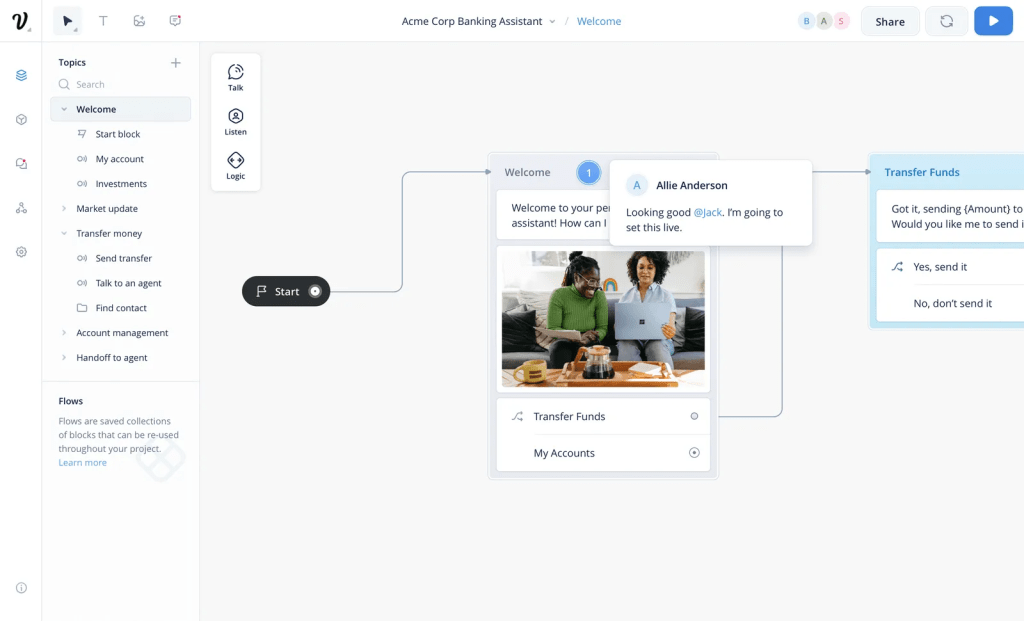
Voiceflow is the gold standard for designing and managing agentic AI that interact via voice or complex chat. It treats conversation design as a visual craft, allowing teams to collaborate on the flow of an interaction.
Best for:
Any industry where the human-like quality and logic of a conversation are paramount.
Main advantage:
The most intuitive visual canvas in the industry, making it easy for non-technical designers to manage high-level agent logic.
5. Gumloop
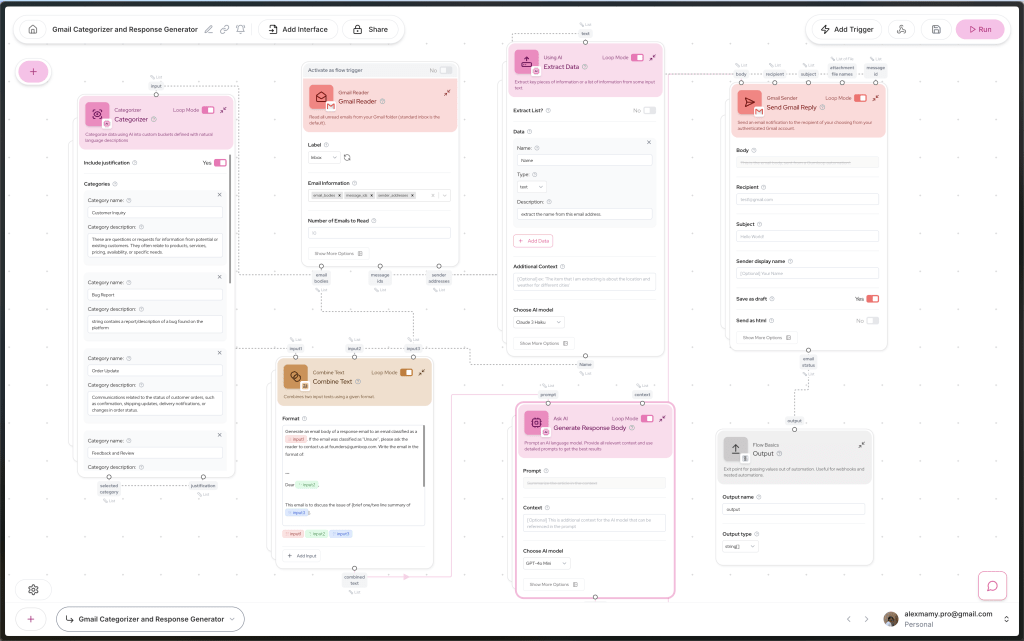
It is a no-code agentic AI platform that empowers non-technical users with zero coding experience to build their own AI agents and workflows thanks to its visual builder. Some reviews describe this platform as a “baby” of Zapier and ChatGPT because it is no-code but with an AI-first approach. It has a wide range of templates to get started with, so you can immediately see different possible use cases of the tool.
Best for:
Marketing, sales, and research teams who need agents to perform batch work across the internet.
Main advantage:
Its Chrome extension and browser-native agents can perform tasks on websites that don’t have an official API, acting just like a human user would.
Read More: Best Scenario Planning Tools to Consider in 2026
How to Choose the Right AI Agent Management Platform For Your Business
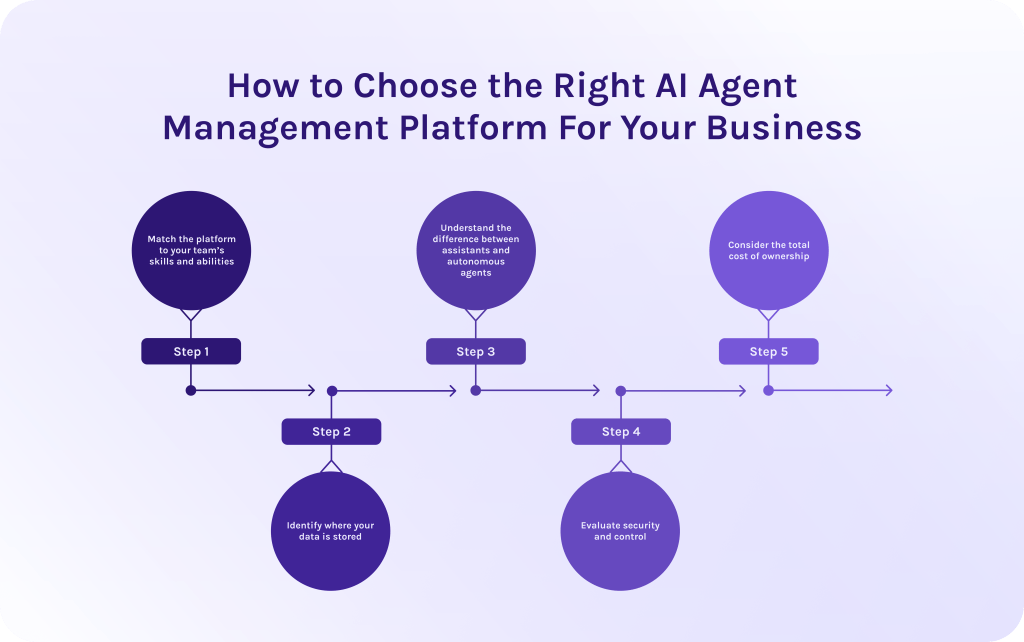
The right AI agent management platform will be different for every company, but there are several key factors that can help you make the right decision.
- Match the platform to your team’s skills and abilities. The most common point of failure is buying a platform your team can’t actually operate. Thus, the best option here is to look for hybrid agentic AI platforms that will have features for a wide audience.
- Identify where your data is stored. The AI agent platform should integrate easily with the systems where your business data already lives. If your company mainly uses Microsoft or Google tools, choose a platform that connects directly with those ecosystems. If your operations rely heavily on CRM systems, pick a platform that works well with customer data. If your data is spread across many different tools, look for AI platforms that provide unified integrations across multiple apps.
- Understand the difference between assistants and autonomous agents. Some AI platforms can only analyse data and suggest actions, while others are capable of executing tasks autonomously with minimal human intervention. Look for the last ones [12].
- Evaluate security and control. If the platform has the open-source origin it’s security has been proven by lots of people. As well, consider if the AI agent orchestration platform is compliant to international regulations and safety standards.
- Consider the total cost of ownership. Beyond the monthly subscription, first of all, take into account token consumption to save costs on repetitive tasks. Secondly, consider implementation time and cost of maintenance [13].
Read More: Revolutionizing Education: How AI-Powered Chatbots are Changing Student Support and Tutoring
Conclusion
To wrap up the insights from this guide on AI management software, let’s remember the essential takeaways for any enterprise leader in 2026:
- The primary value of an agentic platform is the transition from AI that suggests work to AI that executes it. By moving beyond simple chatbots to autonomous workers, organizations are seeing significant reductions in cycle times and manual overhead.
- Success in a complex enterprise environment requires multi-agent orchestration.
- Agentic platforms provide a non-linear ROI. Once an agentic workflow is perfected, it can be scaled infinitely to handle increased volume, allowing companies to grow aggressively while keeping operational costs low.
- The right platform is one that matches your team’s technical skills while offering a hybrid approach. Combining no-code visual builders for business teams with pro-code customization for developers ensures that the platform can evolve alongside your organization’s needs.
Whether you need a custom-built solution or a ready-to-scale platform, we have you covered. Experience the power of EpicStaff on your own, or partner with HYS Enterprise to design a bespoke orchestration strategy for your entire organization.
FAQs
1. What is the best platform to make AI agents?
Among other platforms available on the market, EpicStaff is one of the best AI agent management platforms. It allows its users not only to create AI agents but to orchestrate them to execute complex tasks. It has hybrid architecture (visual workflow builder + advanced customizations directly from code), which allows users with different technical experience to build their own agents and optimize workflows.
2. How do agentic AI platforms benefit enterprises?
There are a few significant advantages of AI platforms:
- Processes become much more independent, resulting in higher executional accuracy and efficiency.
- Companies spend less money while still working with the same resources.
- Processes become more scalable, as you can add more agents to handle more tasks.
- Decisions you make become more informed and confident.
3. What are multi-agent orchestration platforms?
A multi-agent orchestration platform is a system designed to coordinate multiple specialized AI agents so they can work together as a cohesive team to solve complex problems.
4. How to manage an AI agent?
To manage AI agents efficiently, take the following steps:
- Define a clear scope. Treat the agent like a new hire by defining its specific role, data access, and the exact point it must escalate to a human.
- Establish guardrails. Use specific platforms to set hard limits on spending, data privacy, and autonomous actions.
- Ground in real data. Use retrieval-augmented generation (RAG) to ensure the agent only pulls from your verified company files rather than “hallucinating” from its training.
- Audit via AI-on-AI. Deploy a secondary “supervisor” model to monitor logs and flag any deviations from your brand voice or safety protocols.
- Manage the orchestrator. Instead of tracking every individual bot, manage the orchestrator that coordinates the tasks and hand-offs between specialists.
5. What is the difference between AI agents and AI agent orchestration?
- AI agent is an independent software entity capable of performing tasks and continuously learning on its own.
- Orchestration is the framework that coordinates multiple agents to complete a complex project. It manages the hand-offs, resolves conflicts between agents, and ensures they are all working toward the same high-level objective.
6. Who are the big 4 AI agents?
When we are talking about the “Big four” of AI agents companies, for 2026 they are:
- OpenAI: A leader in generative AI and AI agents that provides models and platforms that allow businesses to build autonomous assistants and automate workflows.
- Google: Offers advanced AI models and agent frameworks through its AI ecosystem to enable companies to build intelligent systems that can analyze data and automate processes.
- Microsoft: Allows companies to embed agents directly into the workflow of every Office application.
- Antropic: Focuses on developing reliable and safety-focused AI systems to offer advanced language models that help companies build AI agents for different purposes.
7. How to choose the right AI agent management platform for my organization?
To choose the right agentic AI platform, consider the following steps:
- Step #1. Decide if you need agents that simply suggest work or agents that autonomously finish it. For business teams, low-code or no-code platforms work the best, while for IT and devs code-first platforms would make more sense.
- Step #2. Unmanaged agents are a massive security risk. Ensure the platform includes Human-in-the-loop (HITL), role based access, and security permissions.
- Step #3. Avoid vendor lock-in. The best platforms allow you to switch from one LLM model to the other. You might want a cheaper model (Gemini Flash) for simple email sorting and a heavy-reasoning model (GPT-5 or Sarvam 105B) for complex legal analysis.
- Step #4. Look for platforms that offer token caching to reduce costs on repetitive tasks and the ability to auto-pause an agent if it exceeds a daily spend limit.
8. What is an AI agent platform?
It is a specific software that allows its users to create and manage AI agents to automate various tasks. Instead of coding an agent from scratch, these platforms offer “plug-and-play” connectors to your data, pre-built reasoning models, and monitoring dashboards.
9. Which departments can leverage AI agents use cases?
Honestly speaking, almost every department can benefit from AI agents. For instance, in marketing, AI agents can make investigations of market trends or preferences of the target audience and make summaries. In logistics, it can calculate the most optimal paths or analyse weather conditions to suggest some changes.
10. Can I create my own AI agent?
Definitely, you can create your own AI agent using specialized software. Platforms like EpicStaff offer features not only for creating AI agents but to manage them and adjust for your needs. You can create specific agents for any task you want and define a set of rules it should follow while executing particular tasks.
References:
- https://www.braincuber.com/blog/5-real-world-use-cases-ai-agents-2026
- https://www.iiot-world.com/artificial-intelligence-ml/2026-industrial-ai-trends-driving-global-manufacturing-with-agentic-systems/
- https://www.aicerts.ai/news/agentic-ai-operational-cost-reduction-strategies-for-2026/#:~:text=Grupo%20Bimbo%20claims%20’tens%20of,optimization%20in%20payroll%20and%20finance.
- https://www.researchgate.net/publication/399742291_Agentic_AI_and_Workflow_Orchestration_Balancing_Automation_Ethics_and_Human_Oversight_in_Enterprise_Applications
- https://www.researchgate.net/publication/388144017_Memory_Architectures_in_Long-Term_AI_Agents_Beyond_Simple_State_Representation
- https://www.researchgate.net/publication/398559782_Architectures_for_Building_Agentic_AI
- https://www.researchgate.net/publication/392167351_AI_Agent_Governance_A_Field_Guide
- https://www.researchgate.net/publication/396924575_Context_Engineering_for_AI_Agents_in_Open-Source_Software
- https://www.researchgate.net/publication/392728233_Multi-Agentic_Platforms_Architectures_Applications_and_Emerging_Research_Frontiers_in_Collaborative_AI_Systems
- https://www.researchgate.net/publication/396868964_Autonomous_AI_Agents_for_Multi-Platform_Social_Media_Marketing_A_Simultaneous_Deployment_Study
- https://www.researchgate.net/publication/400811349_Hybrid_Architectures_Combining_Low-Code_and_Custom_Code_in_Cloud_Data_Engineering
- https://www.researchgate.net/publication/397608422_AI_Virtual_Assistants
- https://www.researchgate.net/publication/305954292_Total_Cost_of_Ownership_for_Application_Replatform_by_Open-source_SW
- https://www.researchgate.net/publication/388836569_AI-Powered_Workflow_Orchestration_Maximizing_Business_Productivity_and_Innovation