

Understanding the Importance of Time Management
Time management refers to the ability to use your time productively and efficiently. For IT professionals, effective time management can:
— Increase productivity and efficiency.
— Reduce stress and avoid burnout.
— Improve job satisfaction.
— Lead to career advancement.
— Enhance work-life balance.
Time Management Methods and Strategies
PRIORITIZATION
Start with identifying what needs to be done and then prioritize these tasks based on their importance and urgency, using the Eisenhower Matrix. This 2×2 grid splits tasks into four quadrants:
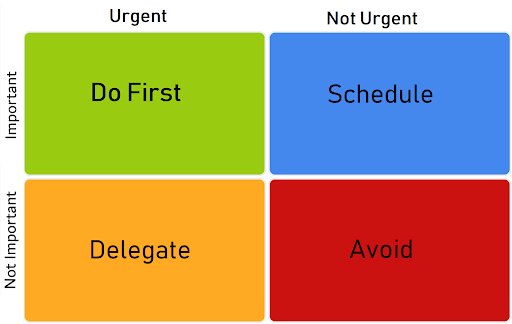
— Important and urgent: Do these tasks immediately.
— Important, but not urgent: Decide when to do these tasks.
— Not important, but urgent: Delegate these tasks if possible.
— Not important and not urgent: Do these tasks later.
For example, addressing a server breakdown would fall under «important and urgent», while a team-building event might be «important, but not urgent».
TIME BLOCKING
Allocate specific time slots for different tasks or activities throughout your day. It helps you focus on one task at a time and prevents multitasking, hindering productivity. For instance, reserve your mornings for complex tasks when you’re most alert and afternoons for meetings and collaboration.
THE POMODORO TECHCIQUE
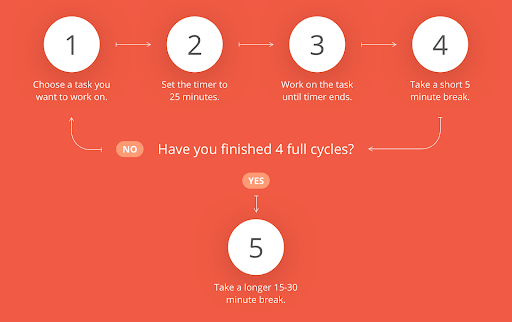
This technique involves breaking your work into 25-minute focused sessions (Pomodoros) separated by 5-minute breaks. After completing four Pomodoros, take a more extended break. This technique can boost productivity by providing regular intervals to recharge and maintain focus.
AGILE PROJECT MANAGEMENT
Initially developed for software development, Agile methodology can be applied to manage tasks in IT effectively. It focuses on breaking large projects into manageable tasks, fostering collaboration, and adapting to changes swiftly. You can learn more about agile methodologies in this article.
THE 2-MINUTE RULE
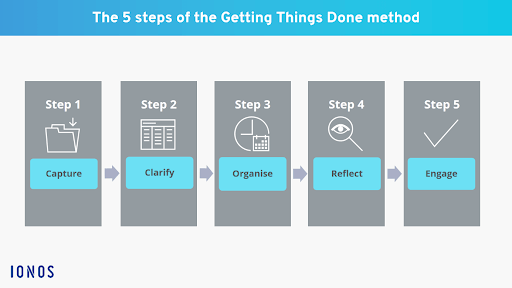
If a task can be completed in two minutes or less, do it immediately rather than scheduling it for later. This rule, part of the Getting Things Done (GTD) methodology, helps to quickly complete small tasks and prevents them from piling up.
Tips and Recommendations
— Limit distractions: Use tools like Freedom or RescueTime to block distracting websites or apps.
— Automate repetitive tasks: Utilize automation tools like IFTTT or Zapier to streamline workflow.
— Learn to delegate: Not every task requires your attention. Delegate tasks to others if they have the capability and time.
Maintain a healthy work-life balance: Take regular breaks, exercise, and ensure you have time for relaxation and hobbies.
What to Read and Watch
Books
— «Eat That Frog!» by Brian Tracy: Offers 21 practical steps to stop procrastinating and get more done.
— «Getting Things Done» by David Allen: Provides a comprehensive GTD system for work-life management.
Online Courses
— «Mastering Time Management» (LinkedIn Learning)
— «Productivity and Time Management for the Overwhelmed» (Udemy)
Videos
— «Inside the mind of a master procrastinator» by Tim Urban (TED Talk)
— «How to gain control of your free time» by Laura Vanderkam (TED Talk)
Time management is a critical skill for IT professionals that can be honed with the correct methods and continuous practice. These strategies can enhance productivity, reduce stress, and advance careers.