
What is Product Portfolio Management Software?
Let’s discuss the definition first.
Product portfolio management tools are software solutions that help organizations manage not only the single product but the entire collection of their products as a unified portfolio.
Meanwhile, traditional tools are focused primarily on the execution of the single product, PPM software can track cross-product dependencies and see a full picture of all ongoing processes. As well, it aggregates data across multiple product lines to help leadership assess performance and align every project with the company’s overarching goals.
Portfolio Management vs Product Management
Well, now, when the definition is clear, we need to pay our attention to the next moment – the difference between product portfolio management (or simply portfolio management) and just product management. While they sound similar, the scope is entirely different:
| Feature | Product management | Portfolio management |
| Focus | Individual product success and user experience. | More strategic one, emphasizes the health and ROI of the entire product portfolio. |
| Goal | To deliver a great product to a specific market. | Strategic alignment and maximizing total value. |
| Question | “How do we build this feature best?” | “Should we invest in product A or product B?” |
Even managers here are responsible for different scopes of work.
- A product manager (PM) is the champion of a specific product or feature set. They live in the details of user personas, backlog grooming, and usability testing.
- A portfolio manager (or head of product) looks across all products to ensure they aren’t competing for the same customers or damaging each other’s revenue.
Read More: AI Agent Management Platform: A Guide to Enterprise AI Agent Orchestration and Governance
Key Benefits of Product Portfolio Management Tools
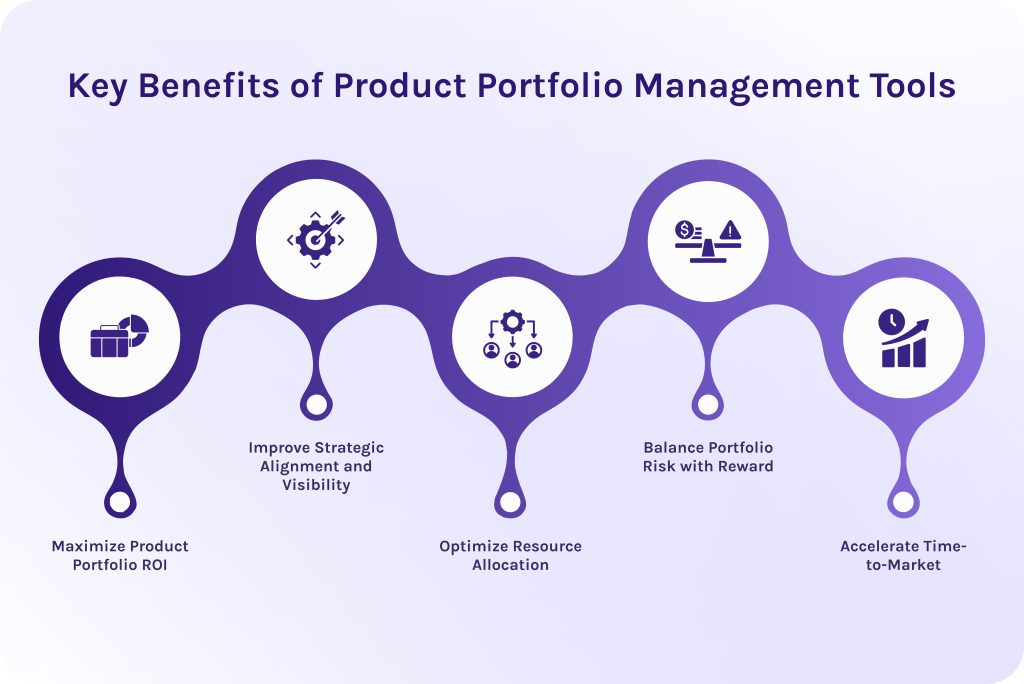
Years ago, companies were using product management tools just for simple task tracking. But now the stakes have risen exponentially, making organizations think of how to deliver maximum value across increasingly complex product portfolios.
Maximize Product Portfolio ROI
First things first, the best product portfolio management tools help product leaders to choose the most valuable products and invest more in them. Thanks to the features that allow organizations to evaluate performance, costs, and expected outcomes, managers and executives can prioritize high-impact products and eliminate underperforming ones to maximize ROI across the entire portfolio [6].
Improve Strategic Alignment and Visibility
The main goal of implementing any tool is to ensure alignment of all initiatives with business goals. Product portfolio management tools, in turn, support this goal by providing a centralized view of all projects within the product portfolio. When companies implement such tools, they, consequently, gain clear visibility into how each product contributes to strategy, thereby helping to make more informed and confident business decisions.
Optimize Resource Allocation
Proper software for product portfolio management allows companies to use limited resources more effectively. They help you to match work demand with available capacity and define the best allocation strategy. According to the PMI research, 33% of projects fail due to poor upfront planning [3]. However, the usage of the proper portfolio management tool significantly reduces inefficiencies such as over-allocation or idle time and ensures that always constrained resources are focused on the most critical initiatives.
Balance Portfolio Risk with Reward
Product portfolio management tools and techniques help you to balance your portfolio in a way that minimizes risks, increasing competitiveness and expected returns at the same time. This helps maintain a healthy mix of short-term gains and long-term investments, reducing exposure to uncertainty [8].
Accelerate Time-to-Market
As we’ve already discussed earlier, product portfolio management tools improve product prioritization, thereby improving execution and reducing delays and bottlenecks. As a result, products can be delivered faster and more reliably, which makes it possible for companies to respond quickly to market opportunities and lower competitive pressure [7].
The transition from simple task tracking to sophisticated portfolio management is a major competitive advantage in 2026. However, identifying these benefits is only half the battle – implementing them effectively requires the right expertise and technology to bridge the gap between your strategy and your resources. Speak with our experts to see how Epicflow can help you identify low-value initiatives and redirect funds toward your highest-impact products.
Well, I hope that the benefits of implementing software for managing product portfolios now are clear and we can proceed to the features you should look for in your ideal tool.
Read More: Complete Guide to Low-Code Development Platforms in 2026
Essential Features of Product Portfolio Management Software
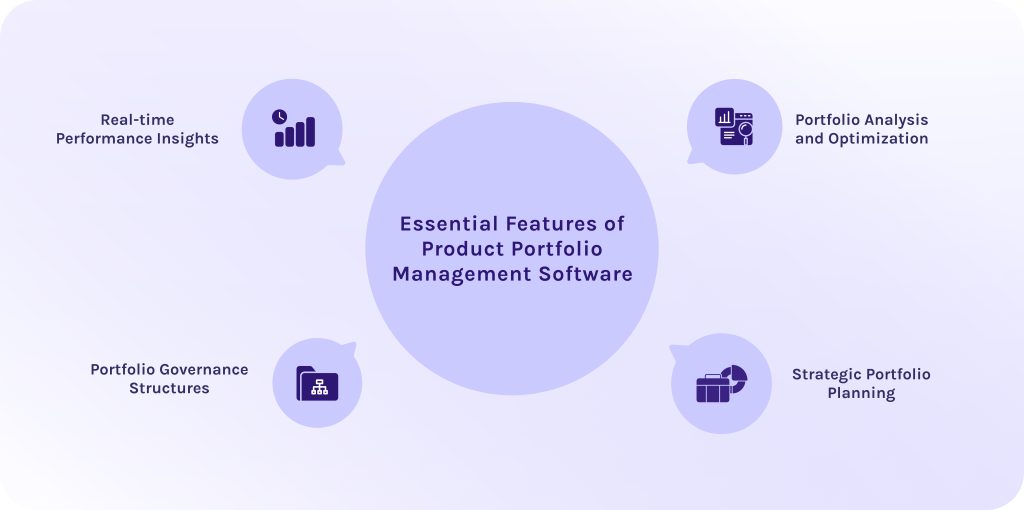
The effectiveness of product portfolio management (PPM) software relies on its ability not only to keep product data but also to analyze and turn it into insights that will help you make more confident and informed business decisions. In this case, we gathered four essential feature pillars that define modern PPM tools:
1. Portfolio Analysis and Optimization.
Modern product portfolio management tools must not only analyze your past performance; they should help evaluate possible outcomes of your decisions.
- What-if scenario modeling. It is the ability of the software to simulate various probable scenarios of consequences of your actions. For example, you’re curious about what might happen if a head of your marketing team quit his position in 3 months. The system calculates the ripple effects on your entire portfolio, adjusting project timelines, lead generation forecasts, and budget burn rates.
- AI-driven portfolio optimization. These are the machine learning algorithms embedded into the software that rank products based on a combination of strategic fit, risk, and projected ROI, removing human bias from the selection process.
2. Strategic Portfolio Planning.
The goal here is to manage the gap between strategic business goals and the product development life cycle. To ensure that your teams are working on the most important tasks, you need to evaluate two following functions:
- Dynamic prioritization. Every project is assigned and score based depending on how well it supports current organizational objectives. If the portfolio’s average alignment score drops, leadership can intervene to realign the roadmap.
- Capacity forecasting. It’s one of the most important features that proper software for product portfolio management tools should have. Why exactly? According to the statistics, 73% of projects fail or underperform due to poor resource management [2]. In this case, capacity planning analyzes historical data and predicts possible bottlenecks and resource overload months ahead, so you can prepare for them as early as possible.
3. Portfolio Governance Structures.
Did you know that cyberattacks happen almost every 39 seconds around the world [1]? That is why data security and privacy measures in the product portfolio management tools are as necessary as breathing.
- Role-based access and permissions. It ensures that people see only what they need to see and change only what they are authorized to change [9].
- Compliance with GDPR and other security laws. The PPM software architecture must be secure and designed to meet strict regulatory requirements across jurisdictions while remaining flexible enough to adapt as laws evolve [10].
4. Real-time Performance Insights.
In times when changes aren’t just frequent but constant and unpredictable, product portfolio management tools must be designed to adapt in real time, rather than react when a bottleneck has already happened.
- Real-time dashboards. Modern product portfolio management tools provide centralized dashboards that reflect the current state of the entire portfolio. These dashboards are continuously updated based on live data, ensuring that stakeholders always see the actual system condition, not outdated reports [11].
- Alerts about possible bottlenecks. The PPM tool proactively identifies resource overloads, which are the main source of bottlenecks. When overload occurs, the system highlights its impact on project timelines and flow efficiency to enable timely intervention before delays propagate across the pipeline.
Read More: Enterprise Workflow Automation: The Key to Scalable Operations
Top Product Portfolio Management Tools and Solutions
1. Epicflow
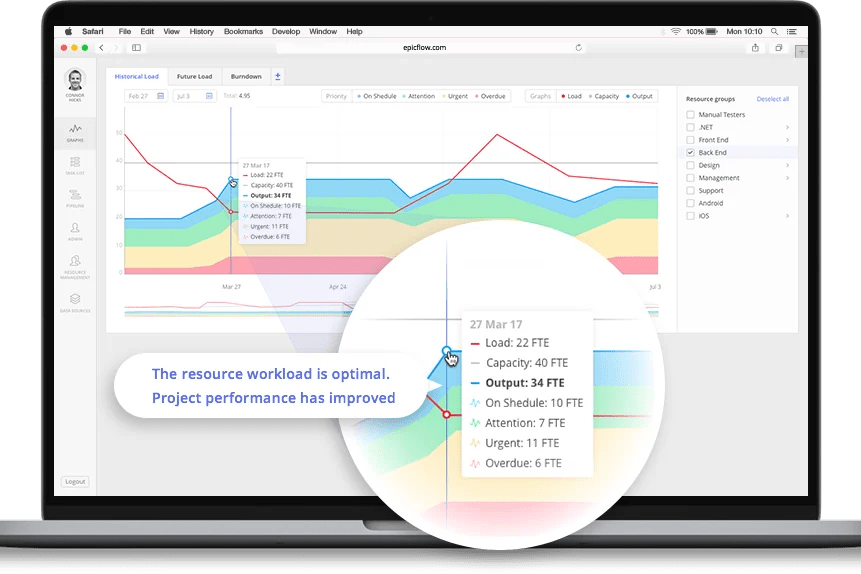
From our perspective, Epicflow is a top product portfolio management tool whose main goal is to help companies wisely operate limited resources across all projects within the portfolio. It focuses on optimizing the flow of work across the entire organization, ensuring that projects are delivered efficiently without overloading teams.
By identifying resource constraints and bottlenecks, Epicflow helps organizations align strategy with execution, maintain a balanced pipeline, and improve overall flow efficiency. This allows businesses to deliver projects faster, make better-informed decisions, and maximize the value of their portfolios.
Best for:
Large enterprises that need to handle multiple concurrent projects with shared resources and need to optimize resource allocation, prioritization, and delivery flow across the entire portfolio.
Key features:
- What-if analysis. Epicflow allows companies to simulate possible consequences of changes before taking exact actions.
- AI-driven portfolio optimization. Essential feature that helps to align demand with real execution capacity.
- Dynamic prioritization. The system continuously adjusts priorities based on strategic goals and system conditions.
- Resource management with overload detection. Epicflow can detect and alert potential bottlenecks months in advance, giving you room and time for improvement.
- Forecasting and predictive algorithms. Epicflow continuously analyses current and historical data to give you accurate sights into project timelines and potential risks.
- Centralized portfolio visibility. Epicflow provides a unified view of all projects, resources, and pipelines, creating a single source of truth for every team member.
- Epica AI assistant. Epicflow’s virtual assistant that manages information across all your projects, can answer questions, and even help to address some challenges.
Pros:
- Epicflow focuses mostly on resource-aware planning.
- Helps companies avoid overbookings or underutilization.
- Allows organizations to efficiently allocate constrained resources.
- Shows a full picture of all ongoing processes.
- Supports informed decision-making.
Cons:
- May have a steep learning curve.
- May require training.
Consult with Epicflow experts to run a “what-if” analysis on your current portfolio and uncover the silent risks threatening your deadlines.
Read More: Best Scenario Planning Tools to Consider in 2026
2. Planview Portfolios
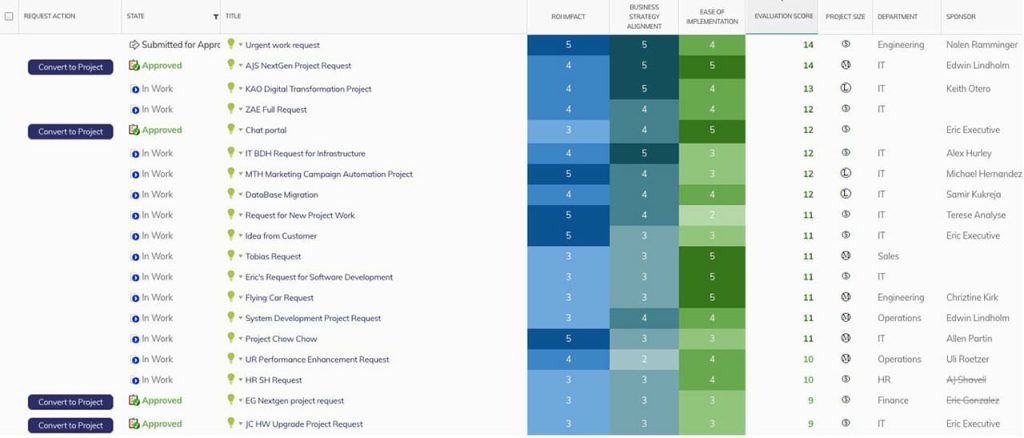
This product portfolio management tool positions itself as a software that helps companies accelerate the achievement of their business goals with maximum efficiency. Some users admit that Planview has excellent support and is extremely customer-oriented.
Best for:
Global organizations that need to connect high-level financial strategy to complex execution.
Key features:
- Product portfolio management.
- Scenario planning and what-if analysis.
- Strategic alignment.
- Funding management.
- Advanced resource management.
- Risk management.
- Conversational AI.
Pros:
- Suits perfectly large and complex enterprise environments.
- Has intuitive visualization features to boost your team’s productivity.
Cons:
- For smaller teams it might feel overwhelming.
- The initial setup might require some time.
3. Planisware Enterprise
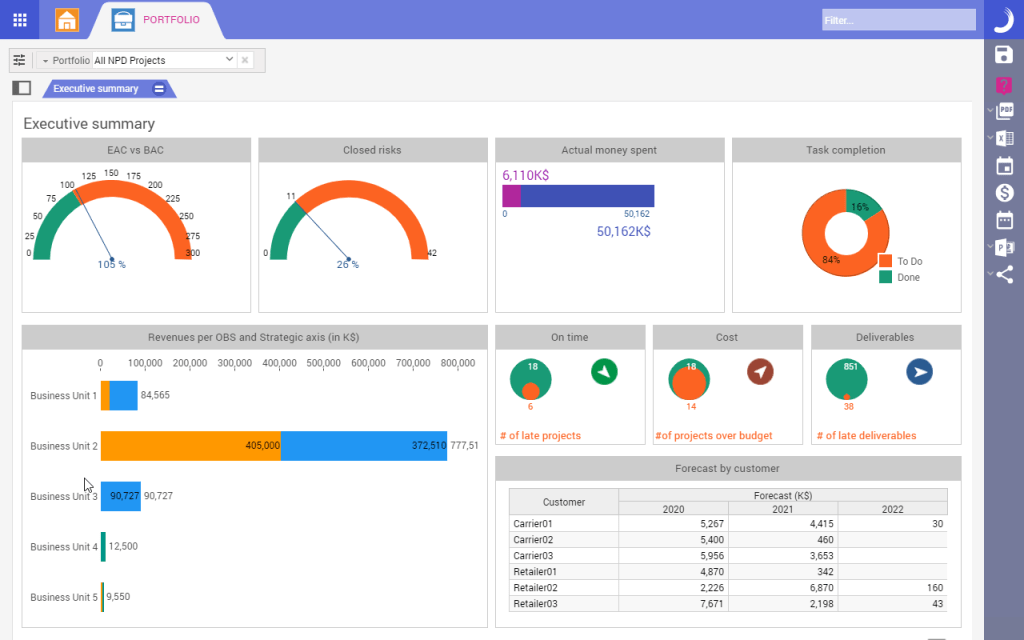
The next tool for advanced product portfolio management is Planisware. It remains the gold standard for organizations where product development (R&D) and engineering are the primary drivers of business value. It is specifically designed to bridge the gap between high-level strategy and technical execution in highly regulated or capital-intensive industries.
Best for:
Best for large-scale enterprises that manage hundreds of concurrent initiatives and compete for the same constrained resource pools.
Key features:
- Product portfolio management.
- Robust resource management.
- Strategic planning and roadmapping.
- Personalized dashboards.
- Comprehensive risk management.
Pros:
- Some users admit its robust customization options.
- Users find its resource management capabilities extremely effective.
- The user interface is easy to use and get used to.
Cons:
- May have a steep learning curve.
- Performance may lower when workflows become more complex.
4. Triskell Software
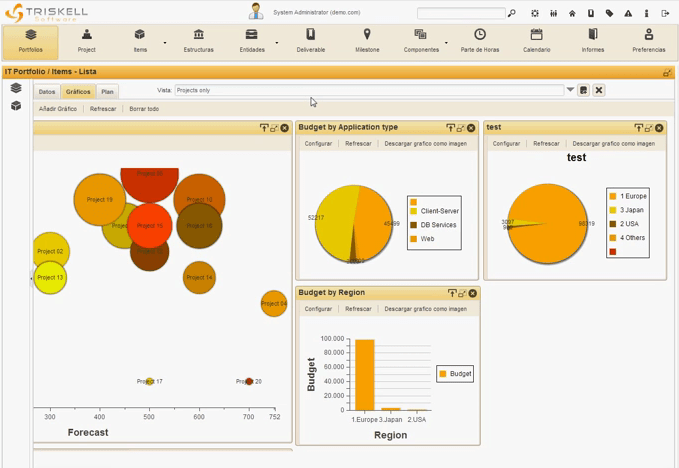
Among other software this solution is a cloud-based enterprise portfolio management (EPM) platform that combines high-level strategic planning and day-to-day work execution in one place. Users like it for its extreme flexibility and “no-code” configuration that allows organizations to adjust the software to their specific governance processes.
Best for:
Companies of any size and within any industry, suitable for startups as well as for large-scale organizations from highly regulated industries.
Key features:
- Product and project portfolio management.
- Advanced resource planning.
- Strategic planning.
- Risk management.
- No-code customizations.
Pros:
- Has an extensive set of features for product portfolio management.
- Integrates seamlessly with other well-known project management tools like SAP or Zapier.
- Users admit its customer support.
Cons:
- May have a steep learning curve.
- An entry point may be high compared to other tools.
5. Craft.io
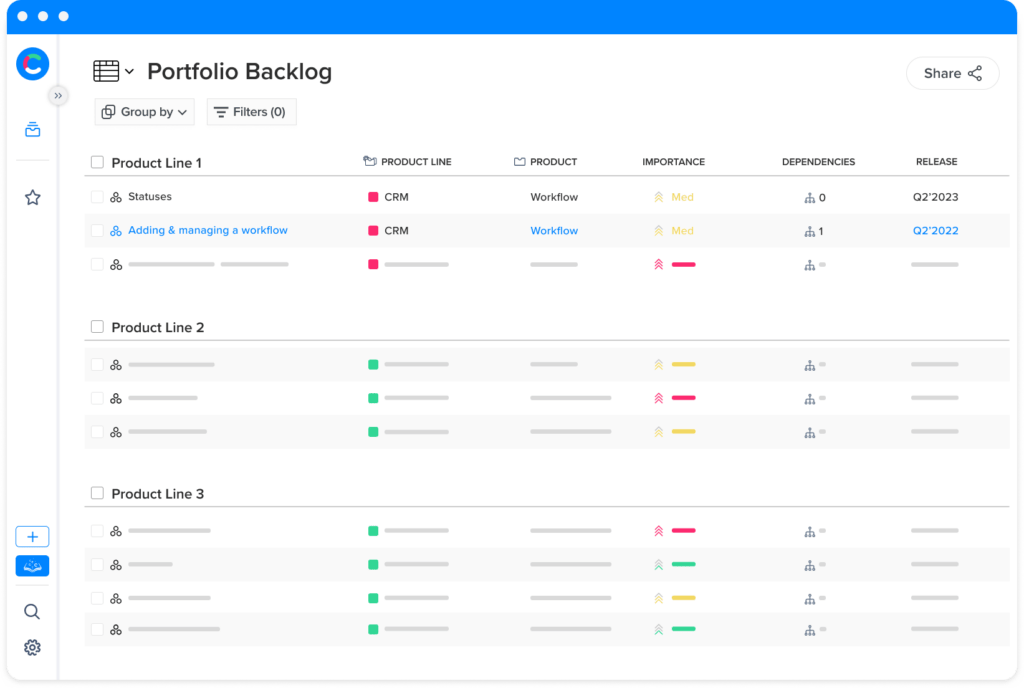
Craft.io is a dedicated product management tool that serves as a command center for product teams. It is highly regarded for its ability to combine abstract product strategy and technical execution, making it a favorite for product-led organizations.
Best for:
Mid-to-large software organizations, especially those using Agile frameworks who need a layer of strategic planning on top of execution tools.
Key features:
- Advanced product portfolio management.
- AI content generation.
- Roadmap visualization tools.
- Robust capacity planning.
- Conversational AI.
- Prioritization.
- Reporting.
Pros:
- The tool is easy to use.
- Users like its roadmap creation capability.
- Has robust customer support.
Cons:
- Some users lack features like integrations with specific tools.
- Some users experience a steep learning curve.
6. Businessmap
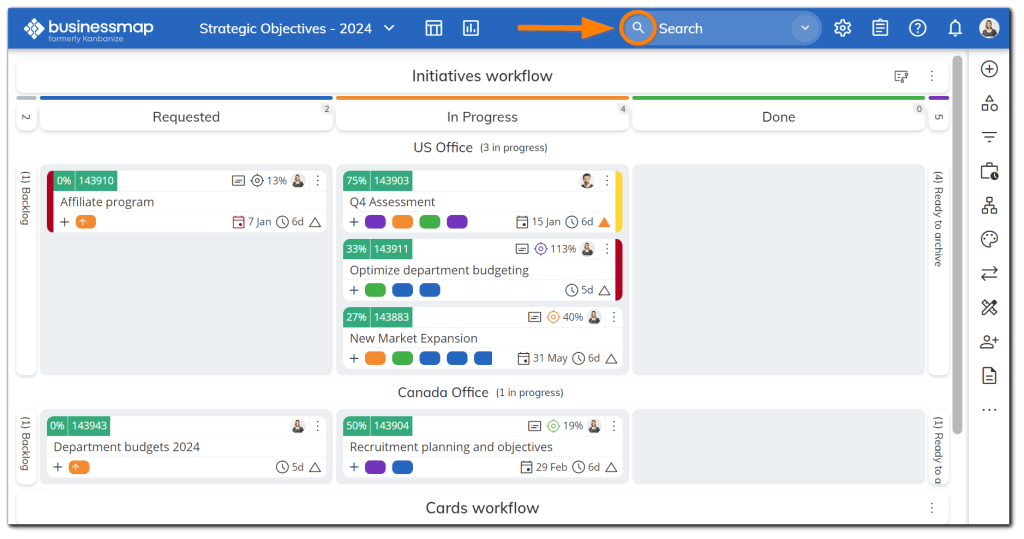
Businessmap (formerly known as Kanbanize) is a powerful Agile project portfolio management software that uses the Kanban method to provide visibility across all levels of an organization. It is a leader for companies that prioritize smooth, continuous delivery of value without the bottlenecks found in traditional Waterfall planning.
Best for:
Organizations that find traditional Gantt charts too rigid and prefer a highly visual system for tracking progress.
Key features:
- Kanban boards with cards.
- Delivery dates forecasting.
- Tracks cross-team dependencies.
- Customizable dashboards and reporting.
- Workspace management.
Pros:
- Highly flexible and can be applied for many use cases.
- The interface is extremely user-friendly.
- Users admit exceptional customer support.
Cons:
- May be less efficient for short-term projects.
- Depends heavily on third-party integrations.
- Has limited resource management features.
7. Quickbase
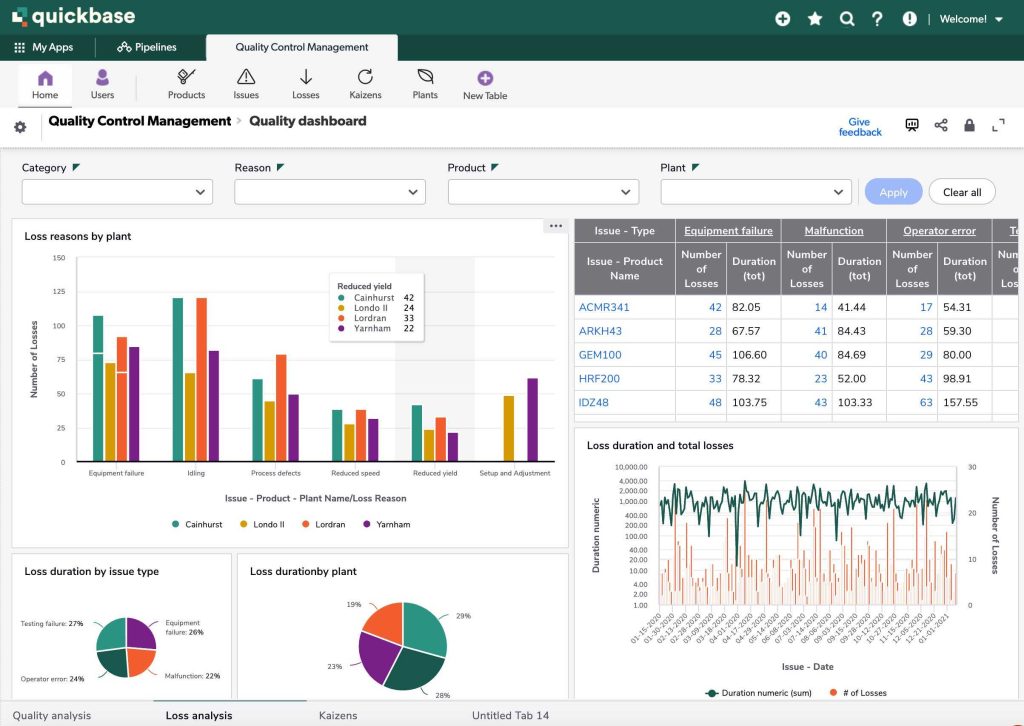
Quickbase is a low-code portfolio management tool that allows organizations to build custom applications to manage their complex product portfolios. It is a top choice for companies that find “off-the-shelf” PPM tools too rigid and need a solution tailored to their unique business logic and fragmented data sources.
Best for:
Ideal for organizations with highly specific, non-standard project approval processes or industry-specific data needs.
Key features:
- Visual, no-code workflow builder.
- Automated workflows for repetitive tasks.
- Pre-built template apps.
- Role-based permissions.
- End-to-end visibility.
Pros:
- Allows fast app development.
- Has strong customer support.
- Highly customizable and scalable compared to other tools.
Cons:
- Has a steep learning curve.
- Small businesses may find the software too expensive.
8. Smartsheet
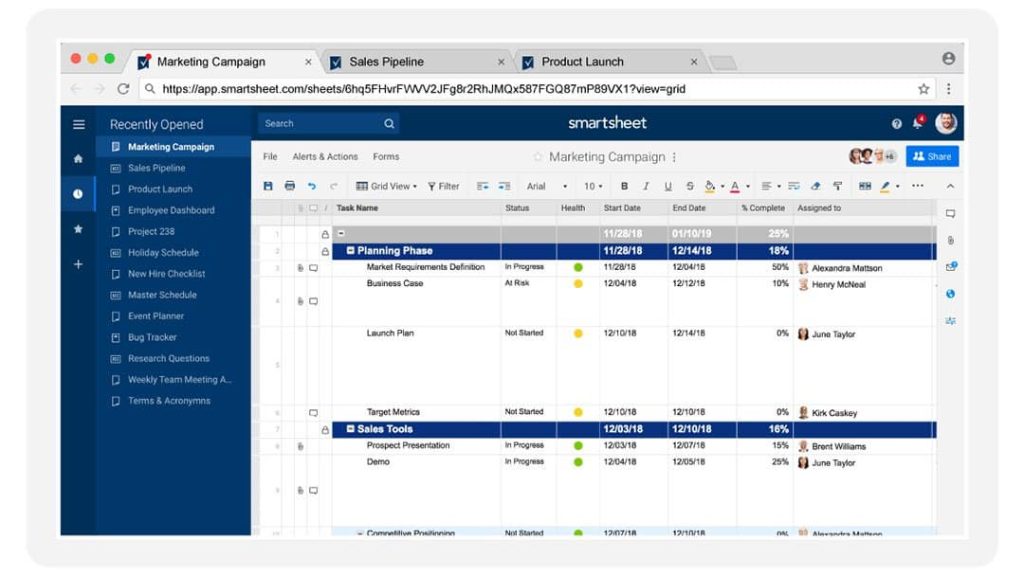
Smartsheet is a versatile product portfolio management platform that combines the familiar interface of a spreadsheet with the power of a robust project management database. It is a top contender for organizations that need a highly flexible environment to manage their product portfolios without the rigid constraints of traditional PPM software.
Best for:
Ideal for teams that currently rely on Excel or Google Sheets but need automated workflows and better security.
Key features:
- Real-time visual dashboards.
- Robust task management.
- Offers intelligent workflow automation.
- Wide range of integrations.
- Reporting.
Pros:
- Users evaluate its ease of use.
- Comprehensive personalization options.
- The interface is extremely intuitive.
Cons:
- Free plan is limited.
- May have a steep learning curve.
9. Asana
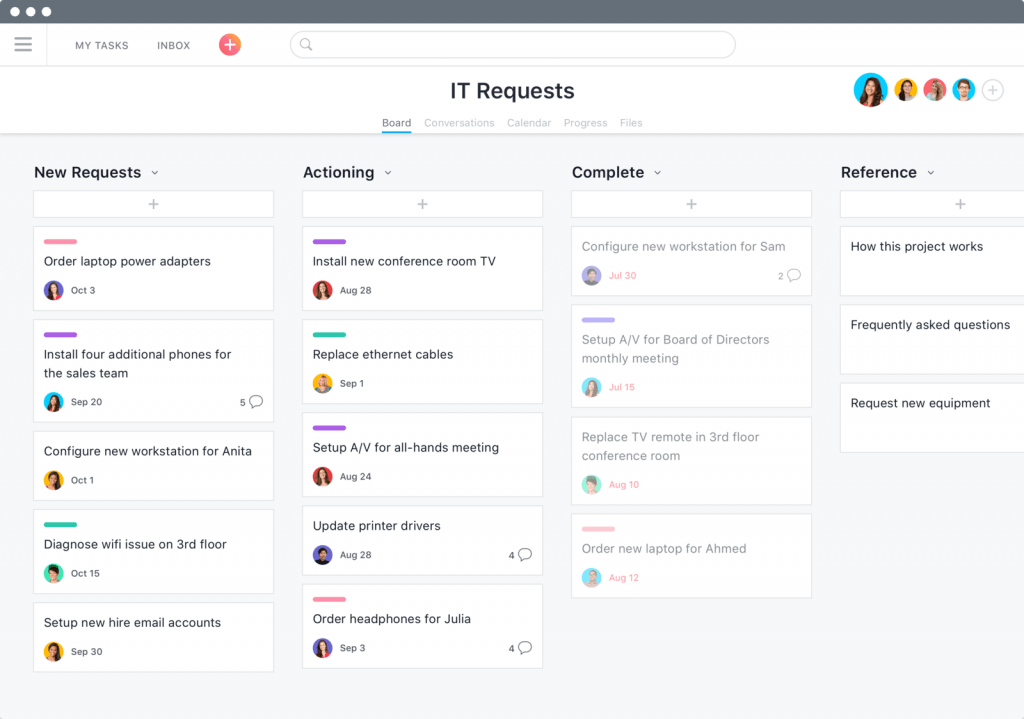
Asana is a leading collaborative work management platform that has evolved into a sophisticated tool for managing product development portfolios. Now it is recognized for its human-centric design, focusing on making strategic goals visible and actionable for every team member.
Best for:
Best for companies that want to tie daily tasks directly to high-level company OKRs.
Key features:
- Product and project portfolio management.
- Automated workflows.
- Collaborative features.
- Time tracking.
- Comprehensive task management.
Pros:
- Wide range of integrations with third-party tools.
- Great user experience.
- Increased work efficiency.
Cons:
- May have a steep learning curve.
- Limited exporting and importing options.
Read More: What Is Business Process Automation? Strategy, Tools, Benefits, and Enterprise Use Cases
Top Product Portfolio Management Tools Comparison
| Tool | Best for | Key advantage |
| Epicflow | Large enterprises that need to handle multiple concurrent projects with shared resources. | AI-driven bottleneck and overload detection. |
| Planview Portfolios | Global organizations. | High-level financial and strategic planning. |
| Planisware Enterprise | Product development (R&D) and engineering. | Strict governance and compliance. |
| Triskell Software | Companies of any size and within any industry. | No-code flexibility and EPM features. |
| Craft.io | Mid-to-large software organizations. | Linking customer feedback to roadmaps. |
| Businessmap | Organizations that prefer Kanban charts. | Visual Kanban boards and flow analytics. |
| Quickbase | Organizations with non-standard project approval processes. | Custom low-code application building. |
| Smartsheet | Teams that currently rely on Excel or Google Sheets. | Familiar grid-based interface with automation. |
| Asana | Companies that want to tie daily tasks directly to high-level company OKRs. | Strategic goal (OKR) mapping. |
Read More: 10 AI Project Management Tools to Pay Your Attention to in 2026
How to Choose the Right Product Portfolio Management Tool
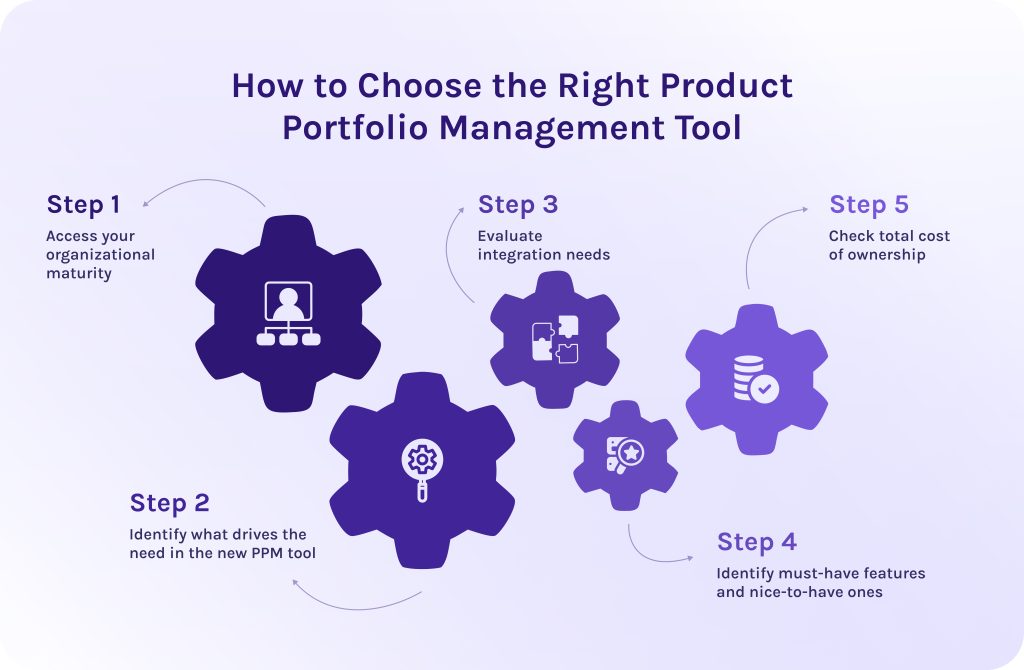
1. Access your organizational maturity.
Before looking at software, honestly evaluate your current PPM maturity level. Buying a high-end tool for a low-maturity process often leads to a situation when you bought software but some features remain unused or even never deployed.
- Low maturity: At this stage, the organization is primarily focused on visibility, simply trying to figure out what everyone is working on.
- Middle maturity: The organization has moved past just tracking tasks and is now focused on consistency and resource efficiency.
- High maturity: At the highest level, the organization treats its products like a financial investment portfolio, constantly re-balancing to maximize ROI.
2. Identify what drives the need in the new PPM tool.
Identify the specific pain point that is forcing this purchase. Different product portfolio management tools solve different problems:
- If your CFO is the main stakeholder, prioritize tools with deep CAPEX/OPEX tracking.
- If your engineering leads are frustrated, look for tools with AI-driven capacity heatmaps.
- If your roadmap doesn’t match your goals, prioritize OKR and goal-mapping features.
3. Evaluate integration needs.
Check if the PPM tool you want to choose integrates natively with your execution tools. Seamless integration ensures that data flows automatically between systems, eliminating the need for manual updates and duplicate data entry.
4. Identify must-have features and nice-to-have ones.
Separate essential capabilities from optional ones. Must-have features should directly address your key challenges (e.g., portfolio visibility, resource management, prioritization, reporting), while nice-to-have features can enhance usability but shouldn’t drive the decision. This prevents overpaying for functionality you won’t use.
5. Check total cost of ownership.
The sticker price of a license is often only 30-40% of the true cost. Evaluate also:
- Cost of initial setup and implementation.
- Cost of administration.
- Cost of onboarding and employee training.
- Consider how difficult it would be to export your data if you decide to switch vendors in three years.
Read More: Best Critical Path Software and Modern CPM Tools for Project Management
Final Thoughts
Product portfolio management tools ensure that your product development execution remains consistent and efficient, thanks to their intelligent newest features. They provide the visibility needed to ensure that every development hour and every dollar spent contributes directly to the company’s North Star.
If you prioritize features like AI-driven scenario modeling, real-time capacity planning, and dynamic prioritization, you can balance risk with reward and accelerate their time-to-market. Ultimately, a well-implemented portfolio management software transforms a collection of individual products into a high-performing investment portfolio and ensures long-term competitiveness in an ever-changing landscape.
Thus, don’t let resource bottlenecks stall your strategic vision. Schedule a personalized demo to see how our AI-driven load graphs and “what-if” simulations can solve your specific capacity challenges.
FAQs
1. What are the tools for portfolio management?
Product portfolio management tools are specialized programs that help organizations be aware of all ongoing processes in their product portfolios. They consolidate all products into a single portfolio view to make it easier to monitor dependencies and overall progress.
2. What key features should I look for in a product portfolio management tool?
Beyond basic capabilities like task-tracking, you should look for the following features:
- Advanced scenario modeling. Top-tier product portfolio management tools allow you to simulate the consequences of changes that you want to apply to your products and evaluate their effect on your entire portfolio’s ROI and delivery dates.
- Predictive resource capacity planning. This feature uses historical data and AI to forecast possible bottlenecks and when they might happen. It identifies silent bottlenecks months in advance, allowing you to hire extra specialists or re-prioritize other activities to mitigate risks.
- Dynamic prioritization. Modern PPM software continuously monitors product data in real time to identify changes and adjust to them as quickly as possible.
- Real-time dashboards. These dashboards provide a single source of truth by pulling live data from different sources together in one place.
- Role-based access control. It ensures that sensitive financial data and high-level roadmaps are only accessible to people with the appropriate authority. By defining specific permissions for executives, product leaders, and contributors, you prevent unauthorized changes while maintaining a clear audit trail for compliance with standards.
3. How do I choose the right product portfolio management framework for my organization?
To choose the right product portfolio management framework, first identify What your primary bottleneck is. Then, ensure the framework integrates with your current delivery tools so that your strategic “buckets” are automatically populated with real-time execution data. Ultimately, think about ease of use and needed features to ensure better efficiency and consistent delivery.
4. How do product portfolio management tools help with strategic decision making?
Product portfolio management (PPM) tools empower strategic decision-making by providing:
- Real-time visibility and objective data to evaluate which products align best with company goals.
- As well, they allow product leaders to run AI-driven “what-if” simulations to forecast the impact of shifting budgets or resources before committing capital.
- Ultimately, these tools move organizations away from gut feeling choices toward a data-backed framework that balances risk, maximizes ROI, and ensures long-term market competitiveness.
5. How do product portfolio management tools integrate with existing product management software?
Tools for product portfolio management integrate with execution software through bi-directional synchronization, automatically pulling real-time progress, budgets, and resource data from tools like Jira into a high-level strategic view. This ensures that as teams complete tasks, executive roadmaps and capacity forecasts update instantly without manual entry, closing the gap between daily work and business goals.
6. What are the benefits of using dedicated product portfolio management software vs spreadsheets?
There are several advantages of using dedicated PPM tools:
- They replace static spreadsheets with automated data syncing that ensures your strategic roadmap always reflects the actual work in progress.
- It provides predictive resource forecasting and “what-if” scenario modeling, allowing leaders to visualize the impact of a decision across the entire portfolio.
- Such product management tools automate strategic scoring and prioritization, ensuring that every product is objectively measured against company goals.
- They also provide immutable audit trails and role-based security, protecting sensitive financial and strategic data in a way that shared spreadsheets simply cannot.
7. How do product portfolio management tools help with resource allocation and prioritization?
In 2026, the primary goal of such tools is to make your workflows and operations as efficient as possible, not only to track tasks. That is why PPM tools use data-driven scoring to rank projects by strategic value, while simultaneously mapping team capacity to ensure you don’t over-commit resources.
8. What are the top open source application portfolio management software?
Although, to use most enterprise product portfolio management tools, you need to buy them or subscribe, there are several open-source software solutions that might be useful:
- OpenProject – best for traditional and hybrid portfolios.
- Plane – best for modern agile portfolios.
- Leantime – best for strategy-first portfolios.
- Taiga – best for pure Agile/Scrum portfolios.
9. What is a product portfolio strategy framework and how do tools support it?
Product portfolio strategy framework is a set of guardrails that helps an organization manage its suite of products as a single investment, managing risks and maximizing the business value. Now, these frameworks are becoming more dynamic systems that ensure every product in your lineup serves a specific strategic purpose.
10. Can Jira be used as a product portfolio management tool?
Yes, but note that Jira on its own is a task-tracking tool, not portfolio management software. Thus, to use it properly for managing product portfolios, you must leverage its higher-level tiers or integrate it with specialized plugins.
References:
- https://eng.umd.edu/news/story/study-hackers-attack-every-39-seconds
- https://zipdo.co/project-management-statistics/
- https://www.pmi.org/-/media/pmi/documents/public/pdf/learning/thought-leadership/pulse/pmi-pulse-2021-appendix.pdf?v=fef7116b-b3d6-4c8e-a274-4ac5db30c48e&
- https://www.researchgate.net/publication/292355814_Product_portfolio_management_for_new_product_development
- https://www.researchgate.net/publication/364222958_Product_Portfolio_Management_in_Competitive_Environments
- https://www.researchgate.net/publication/349711298_Product_Portfolio_Management_Strategic_Targets_and_kpis_over_Life-Cycle_A_Case_Study_in_Telecommunications_Business
- https://www.researchgate.net/publication/316743189_Product_Portfolio_Management_Best_Practices_For_New_Product_Development_A_Review_Of_Models
- https://www.researchgate.net/publication/400418253_Risk-aware_digital_product_portfolio_optimization_using_advanced_analytics_and_market_Intelligence
- https://www.researchgate.net/publication/383295659_Role-Based_Access_Control_RBAC_Enabled_Secure_and_Efficient_Data_Processing_Framework_for_IoT_Networks
- https://www.researchgate.net/publication/221269179_Establishing_Regulatory_Compliance_for_Software_Requirements
- https://www.researchgate.net/publication/388780068_How_Real-Time_Dashboards_Improve_Business_Performance