
What Is AI Agent Orchestration?
AI agent orchestration is the systematic coordination of multiple specialized AI agents to achieve a complex, shared goal [1].
You can imagine it as a team where every member is responsible for different tasks, like analysis of the target audience or identifying the possible impact of changes on your current situation, under the control of an experienced project manager. If a single AI agent is an autonomous software entity that can reason and act, orchestration is the infrastructure and logic that ensures these agents work as a cohesive team [2].
Relationships with agentic AI: Architecture vs. Action
The terms are often used interchangeably, but in a professional architecture, they describe different layers of the stack:
- Agentic AI (action layer). This refers to the capability of an individual agent to be autonomous. An “agentic” system is one where the AI can perceive its environment, reason about a goal, and use tools (like your ATS or email) to act.
- AI agent orchestration (management layer). This is the infrastructure that hosts and directs those agentic capabilities.
Read More: Best Scenario Planning Tools to Consider in 2026
Why AI Agent Orchestration is Mandatory for Complex Workflows
While single-agent scripts work for simple tasks, they fail when faced with the high-stakes reality of enterprise operations. AI agent orchestration is now a mandatory infrastructure for any workflow that requires more than three steps or involves sensitive data.
Here is why AI agent orchestration frameworks are mandatory for complex workflows and the specific benefits it provides.
1. Solving the error compounding in multi-step systems.
In 2026, even the best models have a 95 – 99% reliability rate per step. In a complex, 10-step workflow, a single agent’s probability of success drops mathematically [8].
The formula is sometimes called Lusser’s law but is more frequently known as the formula for the reliability of a series system: Rs = R1 x R2 x . . x Rn [14].
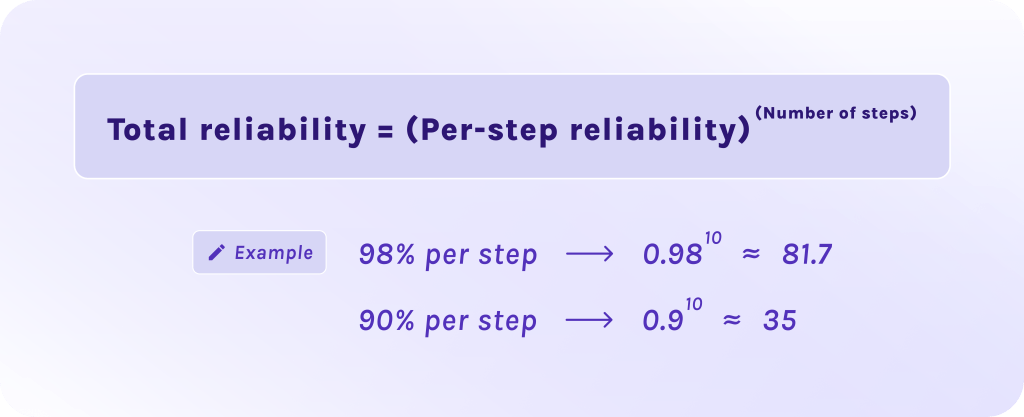
In this case, orchestration breaks these large steps into modular “micro-tasks” with independent validation. If one agent fails at step 4, the orchestrator triggers a self-correction loop rather than letting the error cascade through the entire project.
2. Context window management.
As workflows grow, the context quickly exceeds what a single model can remember accurately.
Here, AI orchestration tools allow for distributed context. Instead of one agent trying to remember everything, the orchestrator manages a shared memory fabric (like Redis). It only feeds the agent the data it needs for completing a specific task, no more. This, in turn, prevents hallucination by information overload.
3. Specialization vs. Generalization.
A single agent trying to be a recruiter, lawyer, and data scientist simultaneously is less effective than specialized agents.
Agentic AI orchestration, in turn, allows you to deploy a virtual team. You can use a high-reasoning model for contract analysis and a fast, low-cost model for data entry, optimizing both cost and accuracy.
Read More: Enterprise Workflow Automation: The Key to Scalable Operations
How AI Agent Orchestration Works
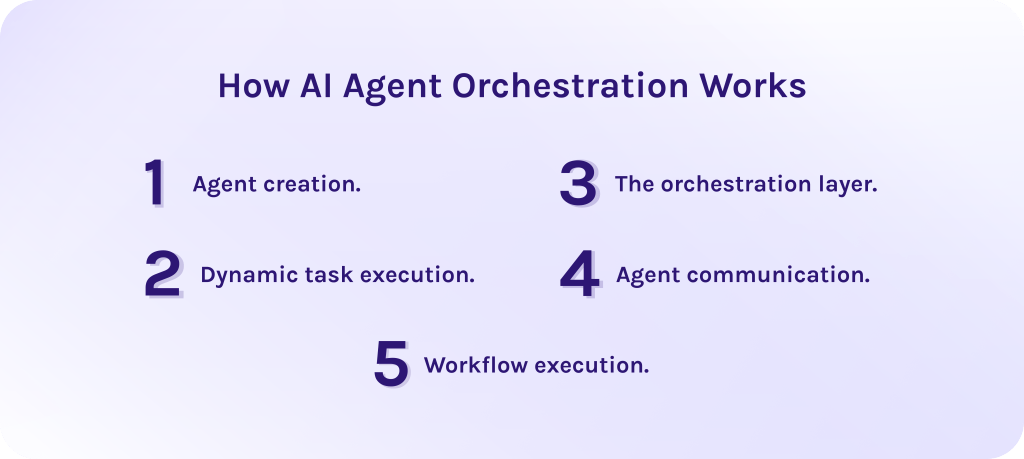
At this stage, you might have some questions about how exactly AI agent orchestration works. That is why we wanted to share with you some simple steps to help you understand the process.
1. Agent creation.
The process begins by defining specialized agents rather than a single generalist. In this phase, you configure:
- Role and goal. You can assign different roles to AI agents and define a specific task it needs to execute. For instance, as the example below suggests, you can create a Marketing Agent and ask it to extract the main info from large text and format it to fit into an Instagram post.
- Skillsets and tools. Granting the agent access to specific APIs, local Python functions, or databases (like an ATS or LinkedIn) – its tools that you can imagine as hands of an AI agent. In some cases, like in EpicStaff, agents can even decide if they need the specific tool that you assigned to them.
- Model selection. Choosing the best “brain” for the specific agent to perform a specific task.
2. Dynamic task execution.
I will describe how task decomposition is performed in decentralized systems like EpicStaff. Here, a complex objective like “find top 5 agentic AI tools” is managed without a central controller. Instead of a top-down assignment, specialized AI agents coordinate themselves through shared protocols or environmental triggers to complete the following sequence of micro-tasks:
- Task 1: A specialized “Search Agent” monitors global technical sources, news feeds, and statistics for specific agentic AI keywords. Once its work is finished, it broadcasts a message to the swarm.
- Task 2: Upon receiving the signal, an available “Scraper Agent” claims the task to extract technical specifications, feature sets, and user reviews from product documentation. This agent independently decides to use the specific tools assigned to it to fulfill the request.
- Task 3: A “Ranking Agent” picks up the structured data from the previous step to evaluate and rank the tools based on performance metrics and integration capabilities. If this agent encounters an error, it will automatically attempt to retry the task based on a predefined limit before the flow continues.
- Task 4: Finally, a “Communications Agent” claims the results and prepares a detailed comparison report for the top 5 tools. If high-stakes approval is needed, the flow can be paused for Human-in-the-Loop (HITL) feedback or specific comments before the final result is delivered.
3. The orchestration layer.
This is the command-and-control center which governs the behavior of the AI agents. Its responsibilities include:
- Routing. Agents can delegate their task to the other AI agent that is currently idle and best suited for the task.
- State management. Maintaining the single source of truth so that if the system reboots, the agents know exactly where they left off [3].
- State and memory management. It ensures that when an agent finishes its work, the next one has all the necessary context without repeating the work [5].
- Guardrails. Pausing for Human-in-the-Loop (HITL) approval before an agent sends a final contract [6].
4. Agent communication.
AI agents in 2026 don’t just pass text. Instead, they share structured context.
- Data exchange. Using protocols like MCP (Model Context Protocol), agents pass structured JSON objects, ensuring the findings of one agent are perfectly understood by the other agent.
- Shared memory. Modern AI agent orchestration platforms use a shared memory fabric so all agents can access a central knowledge base without redundant API calls.
5. Workflow execution.
Once the plan is set, the execution follows an iterative loop:
- Execution. Agents invoke their tools to perform the task.
- Self-correction. If something unexpected happens, the orchestrator catches the error and forces a retry [7].
- Final output. Once all validation gates are passed, the orchestrator delivers the final result to the user.
Read More: What Is Business Process Automation?
Multi-Agent AI Orchestration Architecture
Before we move to the top enterprise AI agent orchestration platforms, it would be better for you to understand what types of architecture such systems might have.
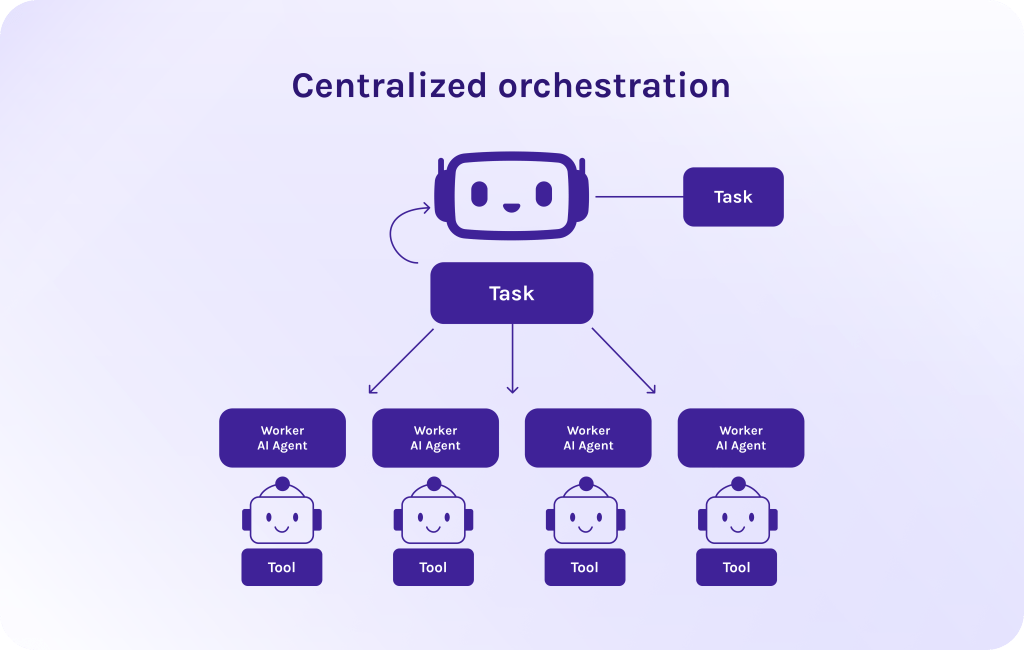
1. Centralized orchestration.
Draw in our style without text at left
It is the agent AI orchestration where one main controller manages everything. In this model, a single “Master agent” or a rigid code-based controller directs all other agents.
How does it work?
- The central orchestrator receives the goal
- Assigns sub-tasks.
- Collects results.
- Decides the next move.
In this case, the AI agent orchestration framework provides a clear audit trail and ensures agents follow strict compliance rules. This model is the best choice for highly regulated workflows where a “single point of truth” is mandatory.
2. Decentralized orchestration.
In such systems AI agents don’t need to be controlled by a central controller – they coordinate themselves. Agents coordinate with each other directly based on shared protocols or environmental triggers.
How does it work?
In this model agents negotiate tasks. If one AI agent did its work, it broadcasts a message, and an available needed agent claims the task.
The main benefit here is high resilience. There is no single point of failure; if one agent crashes, the rest of the swarm continues to operate, making it a perfect choice for dynamic, creative tasks like multi-channel marketing where the workflow isn’t linear [10].
3. Hierarchical orchestration.
This is the most common model for multi AI agent orchestration tools. It organizes agents into systems that can be understood as a typical company structure:
- A top-level AI agent manages mid-level agents.
- Mid-level agents manage smaller tasks.
How does it work?
A high-level AI agent manages several smaller agents who in turn manage way smaller agents. This architecture’s strength lies in a great scalability and oversight. It allows you to manage hundreds of agents by grouping them into manageable departments, balancing autonomy with executive control, perfect for enterprise-scale operations.
4. Federated orchestration.
A newer standard in 2026, federated orchestration allows independent systems or organizations to collaborate without fully sharing their private data or logic [11].
How does it work?
Agents from Company A and Company B work together via a standardized protocol (like MCP). They exchange only the necessary outcomes, keeping their internal reasoning and sensitive databases private to ensure data privacy and interoperability. It suits best B2B collaborations and cross-company logistics.
Read More: Best Free ERP Software: Open Source and Free ERP Systems Compared
Top AI Agent Orchestration Platforms
Now, we’ve finally reached the most important part of the article – top software AI agents for orchestration for your business.
1. EpicStaff
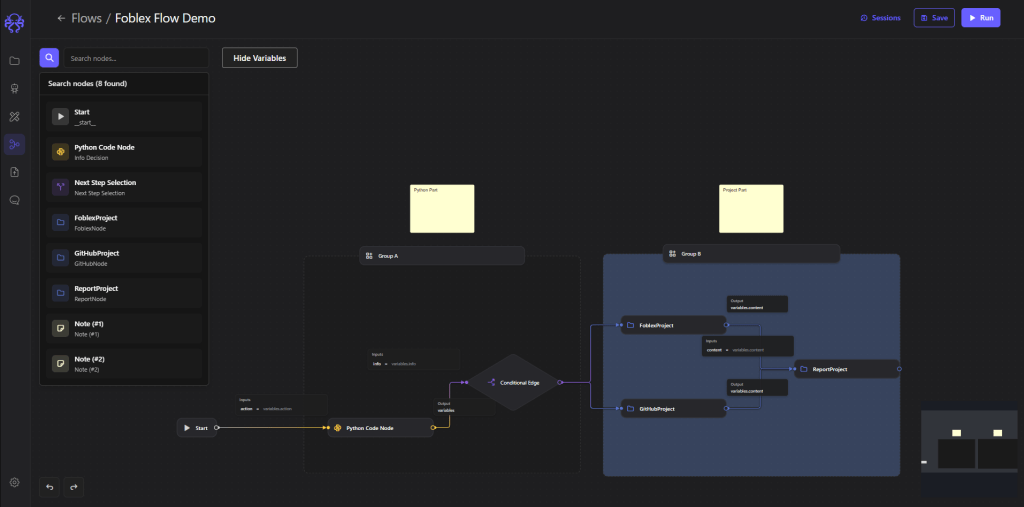
EpicStaff is an Enterprise production-grade, hybrid “Visual + Code” orchestration platform designed to bridge the gap between business logic and technical execution. It is built on a robust Python stack (Django, FastAPI) and utilizes a containerized environment to ensure agents operate in a stable, scalable manner.
Key advantage:
It offers a transparent architecture that eliminates dependency on individual developers while allowing the business to remain the “keeper of knowledge” for its own processes.
Best for:
Companies needing an autonomous operating core that can handle end-to-end cycles, from lead generation and marketing to invoicing, without manual intervention.
2. LangGraph
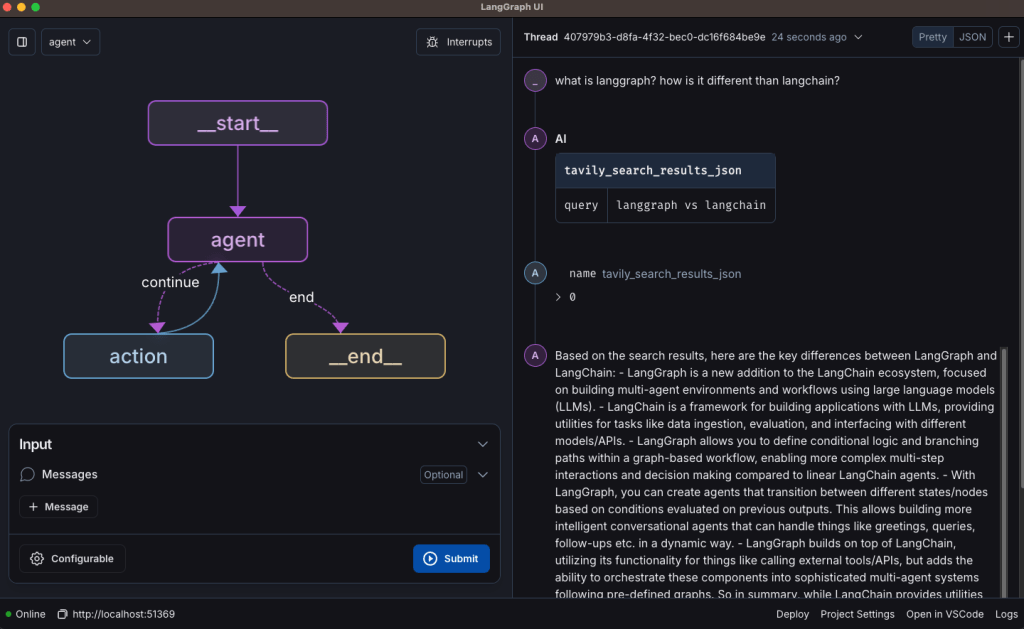
LangGraph is a specialized framework designed for building stateful, multi-agent applications with cyclic graph logic [12].
Key advantage:
It excels at managing complex loops where an agent might need to revisit a previous step or wait for human approval before proceeding.
Best for:
Highly technical teams building custom workflows that require granular control over every state transition and decision node [12].
3. CrewAI
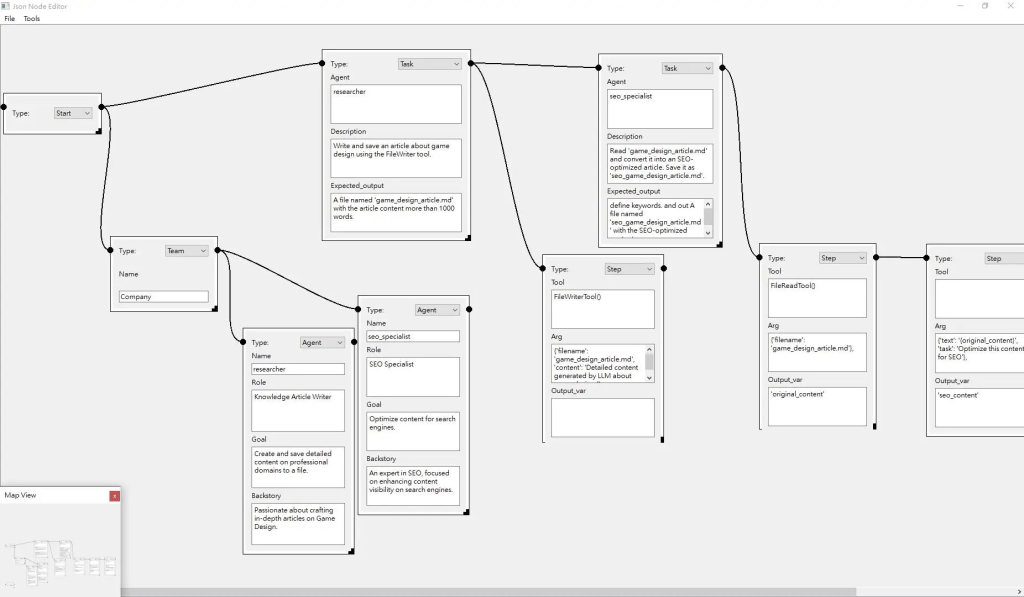
CrewAI focuses on role-based multi-agent collaboration, allowing developers to define specific personas (e.g., “Researcher,” “Writer,” “Analyst”) that work together as a cohesive unit [13].
Key advantage:
It is designed to be pragmatic and process-driven, making it easy to set up collaborative AI crews that can autonomously delegate tasks among themselves.
Best for:
Rapidly deploying specialized agent squads for content creation, market research, or technical analysis.
4. Zapier
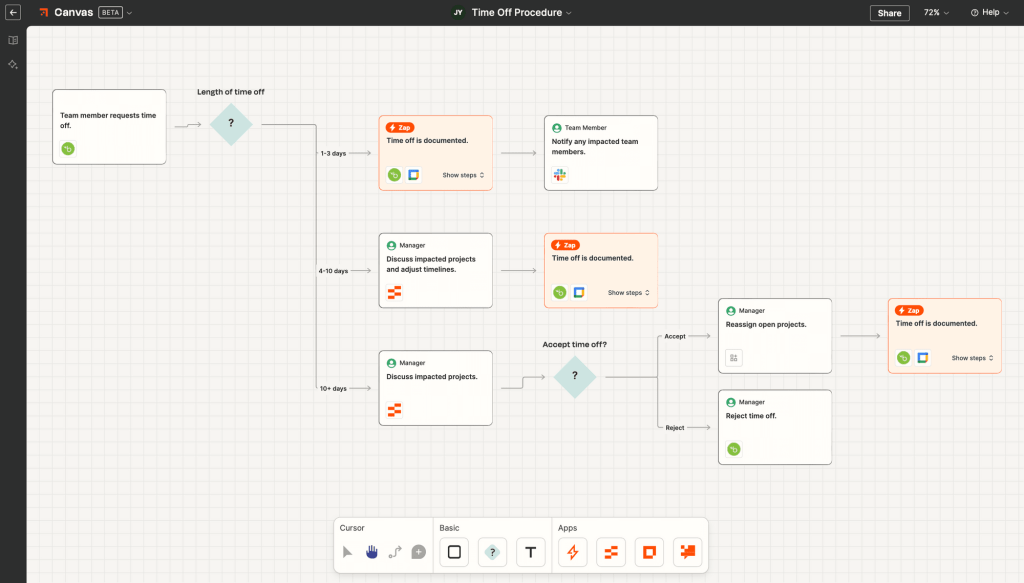
Zapier has evolved from a simple automation tool into a natural-language orchestration hub that connects AI agents to over 8,000 different applications.
Key advantage:
It allows non-technical users to create agents that can listen for triggers and take actions across a massive ecosystem of SaaS tools.
Best for:
SMBs and individual departments that need to automate cross-platform tasks quickly without writing a single line of code.
5. Workato
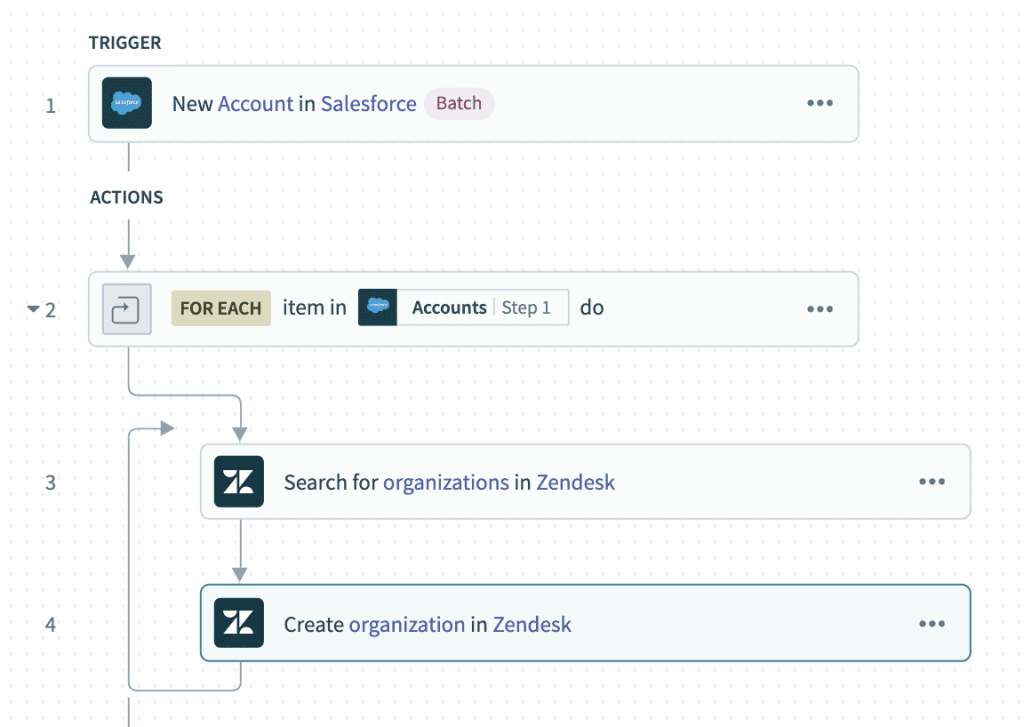
Workato is an enterprise-leading iPaaS (Integration Platform as a Service) that provides a governed, secure environment for orchestrating AI agents at scale.
Key advantage:
It focuses on approved, secure actions that AI agents are allowed to perform and SOC2-compliant security layers, ensuring that AI agents follow strict corporate guardrails when interacting with sensitive ERP or HCM data.
Best for:
Global IT organizations that require high-level governance and deep integration with legacy systems like SAP or Oracle.
Read More: Top 10 AI Software Development Companies (2026 Guide)
AI Agent Orchestration Tools Table of Comparison
| Software | Best for | Key advantage in 2026 |
| EpicStaff | Complex multi-agent staffing and custom SaaS workflows | The Hybrid visual + code environment |
| LangGraph | Complex, looping workflows | Offers the most precise control over state and human-in-the-loop checkpoints |
| CrewAI | Role-based collaboration | Extremely intuitive for setting up a “crew” of agents |
| Zapier | Rapid prototyping | Natural language orchestration |
| Workato | Global IT departments | Solving the trust problem that keeps AI out of mission-critical systems |
AI Agent Orchestration Use Cases
The Move Your Machine (MYM) case study demonstrates how EpicStaff, a hybrid AI orchestration platform, was used to engineer a fully autonomous logistics core, effectively replacing traditional manual processes with an AI agent orchestration platform.
Before implementing EpicStaff, MYM aimed to disrupt a market plagued by fundamental obstacles:
- Quotes for freight transportation could take days to generate.
- Customers often faced hidden fees that appeared only after invoicing.
- The process required endless phone calls and lacked cargo visibility.
To solve these challenges, MYM partnered with HYS Enterprise to build an autonomous operating core using EpicStaff as a “hybrid Visual+Code” communication bridge. This architecture allows the business to retain process knowledge while developers maintain technical control. The solution allowed MYM to:
- Reduce the price calculation from days to seconds, saving up to 40% of total delivery time.
- Generate marketing content in minutes.
- Handle everything from lead generation and marketing to invoicing and logistics order transfers without human intervention.
- A two-person founding team, augmented by AI, outperforms traditional large departments.
Partner with HYS Enterprise to transform your business with the same autonomous AI orchestration that helped Move Your Machine automate 90% of its workload. Contact our experts today to build production-ready AI systems that scales your operations without increasing headcount.
Conclusion
As we look toward the remainder of 2026, it is clear that AI agent orchestration has matured into a fundamental requirement for the modern enterprise. The success of early adopters like Move Your Machine proves that the right orchestration architecture can fundamentally rewrite a company’s DNA. By shifting 80-90% of operational workloads to digital employees, organizations are proving that an AI-augmented team can consistently outperform traditional departments.
FAQs
1. What is AI agent orchestration?
AI agent orchestration is the process of coordinating multiple specialized AI agents to achieve a complex goal. Unlike a single prompt-response interaction, orchestration involves managing the workflow, memory, and communication between agents when a “Researcher” agent, for instance, passes data to a “Writer” agent.
2. What are the best AI agent orchestration tools?
The following tools represent the current leaders in building and managing multi-agent systems:
- EpicStaff – for autonomous operating cores and complex business cycles.
- LangGraph – for highly technical teams building custom, stateful applications with complex loops.
- CrewAI – for role-based collaboration and process-driven agent teams.
- Zapier – for rapid prototyping and automation for non-technical users.
- Workato – for enterprise-grade governance and mission-critical system integration.
3. What are the AI agent orchestration best practices?
- Modular design. Give agents narrow, well-defined scopes.
- State persistence. Ensure the system can resume a task if a process crashes.
- Human-in-the-loop (HITL). Implement checkpoints for high-stakes decisions (e.g., financial transfers).
- Observability. You can see in detail how the agent and each node work separately and why it gave such a result.
4. How to troubleshoot AI agent orchestration issues?
To troubleshoot AI agent orchestration, utilize distributed tracing tools to pinpoint exactly where the reasoning chain or hand-off protocol fractured. High-performance debugging in 2026 focuses on enforcing strict Pydantic schemas for inter-agent communication and implementing automated self-correction loops that trigger when confidence scores drop below a set threshold.
5. How does an AI agent orchestration platform differ from a standard LLM?
A standard LLM is a reasoning engine. An AI agent orchestration platform is the operating system that surrounds that engine, providing the connectivity, state management, and tool-access (APIs, databases) necessary for the agent to act autonomously.
6. What is multi-agent orchestration in AI?
In fact, multi-agent orchestration is a process of managing and coordinating the work of different AI agents to achieve predefined goals or to solve problems that are too large, too long, or too complex for a single model to handle alone.
7. Why is multi-agent orchestration better than one large agent?
Large agents suffer from loss of details and higher hallucination rates. Breaking tasks into specialized agents:
- Improves accuracy. Each AI agent focuses only on a particular task at once, plus for mistakes tracking there is another specialized agent available.
- Allows for parallel processing. Work moves faster as agents can process multiple processes simultaneously, not waiting for the other agent to finish its work
- Makes debugging significantly easier. You can quickly identify where processes get stuck because each agent handles a separate step.
8. Can I use open-source AI agent orchestration platforms?
Definitely. Open-source is the backbone of the industry. Frameworks like EpicStaff and LangGraph allow for local hosting, which is critical for data privacy and avoiding vendor lock-in with major cloud providers.
9. How do agents communicate in a multi-agent system?
AI agents typically communicate via inter-agent protocols. In 2026, many systems utilize the model context protocol (MCP) or standardized JSON schemas to pass structured data and feedback loops between different agent nodes.
10. What are the most common AI agent orchestration trends in 2026?
The biggest trend is verticalized orchestration, where platforms come pre-configured with industry-specific logic (e.g., Legal-Agent-Orchestrators that understand bar association compliance out of the box).
References:
- https://www.researchgate.net/publication/386083531_A_Comparative_Study_of_AI_Agent_Orchestration_Frameworks
- https://www.researchgate.net/publication/402102192_Orchestration_and_Automation_with_AI_Agents
- https://www.researchgate.net/publication/398936154_The_Role_of_Agent_Orchestration_in_Scalable_AI_Workloads
- https://www.researchgate.net/publication/400558650_Agentic_AI_with_Orchestrator-Agent_Trust_A_Modular_Visual_Classification_Framework_with_Trust-Aware_Orchestration_and_RAG-Based_Reasoning
- https://www.researchgate.net/publication/395938318_Multi-Agent_AI_Orchestration_Using_MCP_and_Semantic_Kernel_for_Autonomous_Enterprise_Systems
- https://www.researchgate.net/publication/398878639_Scientific_Discovery_and_Agent_Orchestration_AI’s_Next_Frontier_by_2026
- https://www.researchgate.net/publication/395890369_AI-driven_real-time_diagnostics_and_self-correcting_control_schemes_for_next-_generation_nuclear_energy_systems
- https://www.researchgate.net/publication/333564721_Combating_the_Compounding-Error_Problem_with_a_Multi-step_Model
- https://www.researchgate.net/publication/399522382_Orchestral_AI_A_Framework_for_Agent_Orchestration
- https://www.researchgate.net/publication/401911972_Decentralized_Orchestration_Architecture_for_Fluid_Computing_A_Secure_Distributed_AI_Use_Case
- https://www.researchgate.net/publication/398507619_Federated_AI_for_Multi-Enterprise_Supply_Chain_Collaboration
- https://www.researchgate.net/publication/391973268_Introduction_to_LangGraph
- https://www.researchgate.net/publication/386306828_Unlocking_AI_Creativity_A_Multi-Agent_Approach_with_CrewAI
- https://www.intechopen.com/chapters/50094